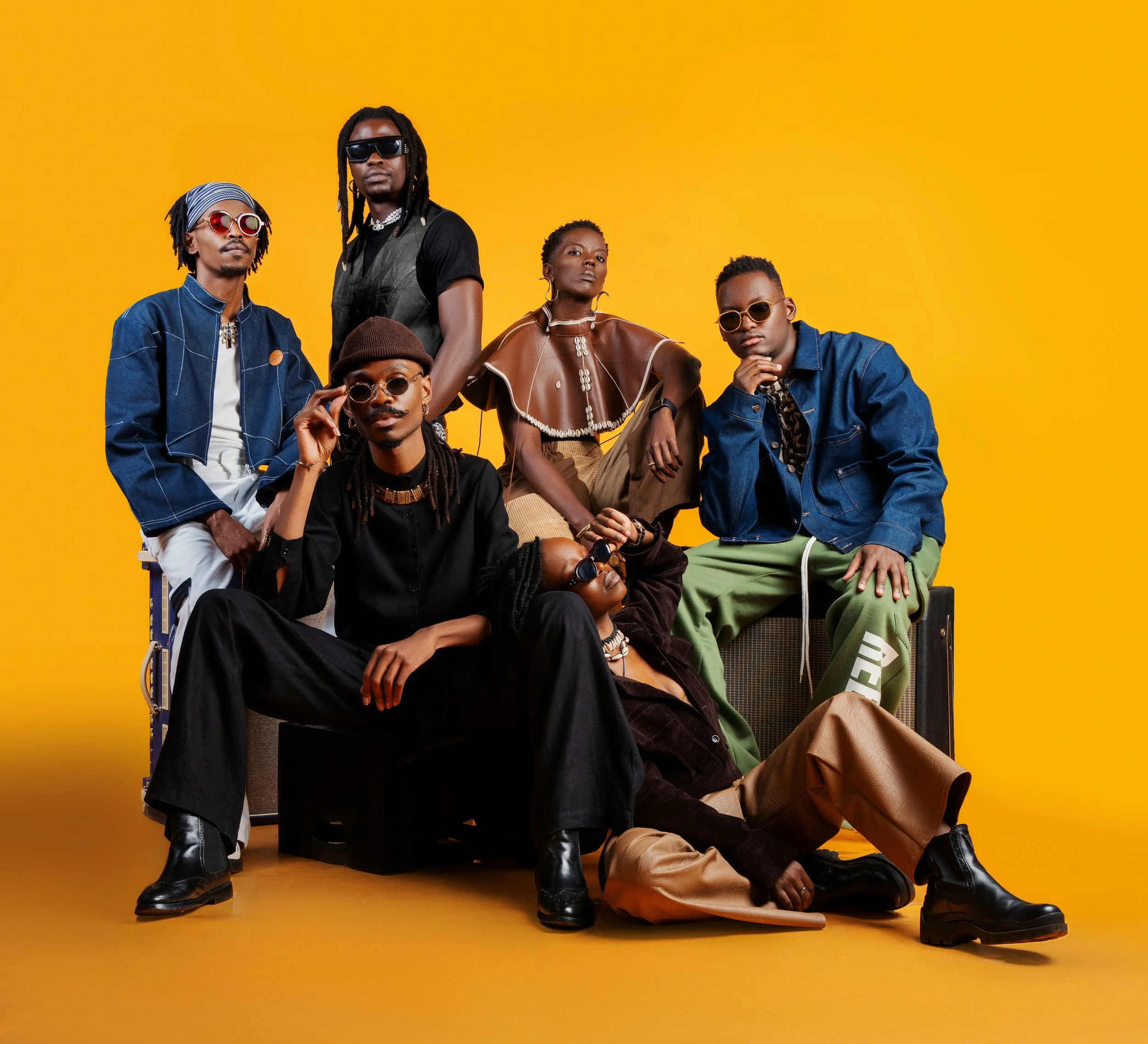
Taz Waves Wants You To Hear Sudan DIfferently
Taz Waves does not seem particularly interested in arriving. Even when he talks about Sudan, the country at the heart of his music, he speaks in terms of movement: roads, deserts, highways, people encountered briefly and places left behind. His latest album, The Electronic Sounds of Sudan, is full of journeys, but it is less a travel record and more a way of carrying home while continuing to move.
“I describe myself as a traveler,” he says. “Someone who passes through people, who spends time with them and just continues his journey.” It is an apt description of an artist whose life has been shaped by movement. Born in Saudi Arabia, moving between different places and later studying audio engineering in Jordan, Taz has spent much of his life crossing borders, neighbourhoods and cultural spaces. Along the way, he learned to pay attention.That might be the most important thing to know about him. Taz is curious. He asks questions. He looks closely. Something that another person might dismiss as ordinary can become, in his hands, a sound, an image, a rhythm or a story worth carrying somewhere else. His creative life began with painting. Then came photography, fashion and, eventually, hip hop. Around 2012 and 2013, he was writing rap and teaching himself to make beats.
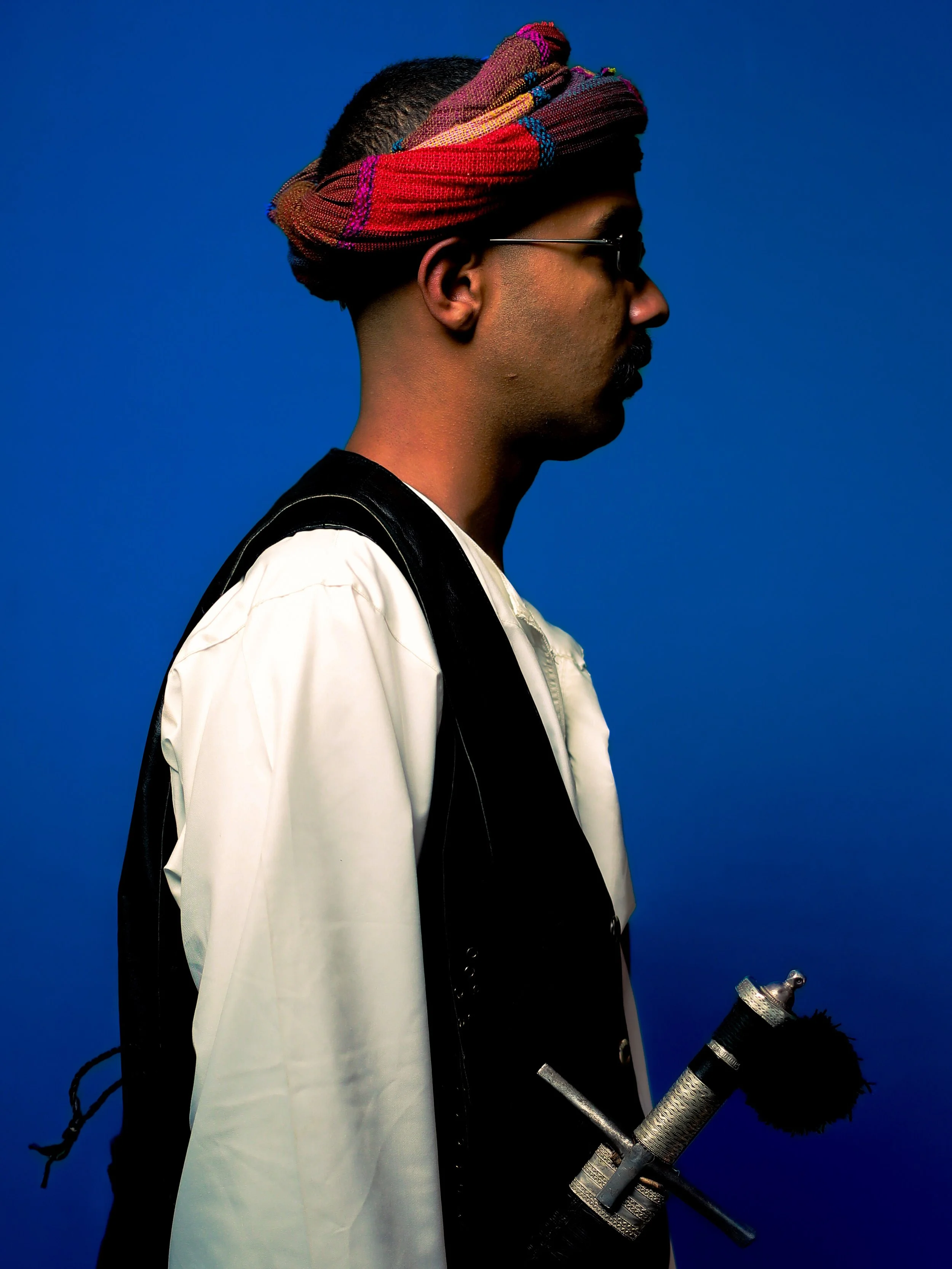
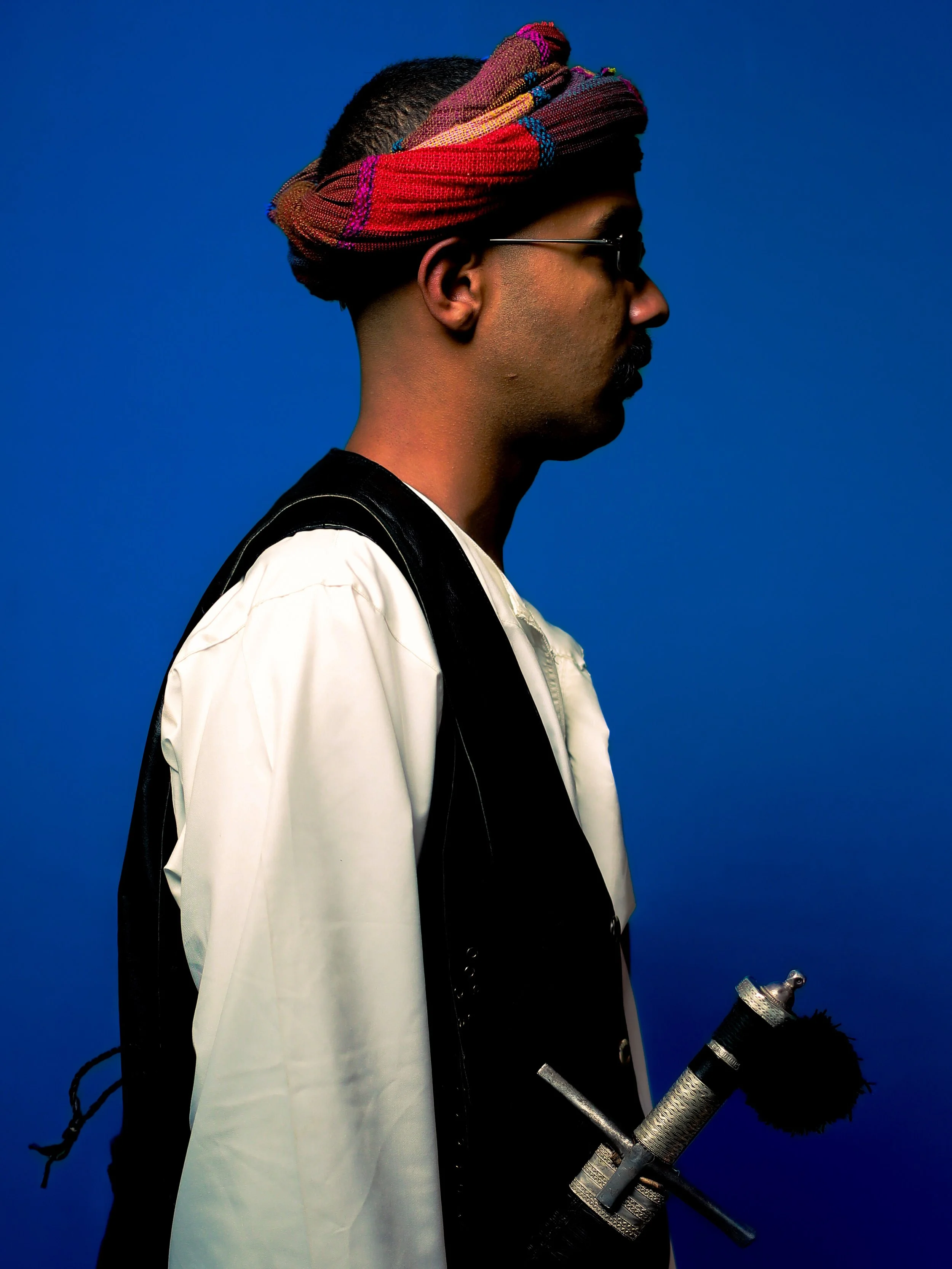
Taz Waves photographed by Ahmed Tmsah
It was not the conventional beginning of a musician. He did not grow up with an instrument placed in his hands. Born in Saudi Arabia and raised in a Muslim environment where music could be considered forbidden, he remembers an era when people would even smash guitars and keyboards because they believed music was haram. Music was something he found rather than inherited.For years, hip hop was his language. Eventually, though, he realised that words were not where his strongest expression lived. “I discovered that I, as Zaher, I express more when it comes to melody than words,” he says. There was freedom in that discovery. Rap could reveal too much, exposing what he had lived through, what he believed and how he saw the world. Melody offered another kind of intimacy that could retain its structural integrity and communicate without surrendering everything. It also left room for the mystery built into the name Taz Waves. “The Waves speaks to sound, while Taz comes partly from the Tasmanian Devil, the unpredictable Looney Tunes character’,’ he says.
Then there is the Unknown Traveler, a recurring idea in his work, born from his experience of constantly moving. He describes staying somewhere for months, becoming familiar with the people at a local shop, exchanging greetings and smiles while they remain unaware of the other life he has elsewhere as a musician. To them, he is simply another person passing through. That anonymity is not something he necessarily wants to escape. Perhaps that is why travel appears so often in his music. On The Electronic Sounds of Sudan, the road becomes a metaphor for memory, identity and the strange relationships formed along the way.
Highways is about the people encountered while travelling, strangers with whom you might share food, protect each other's belongings, sleep beside, laugh with and speak honestly to, sometimes for only a day or two. Naseem takes its name from the Saudi neighbourhood where Taz grew up, a place he has not seen for more than a decade. All Roads Lead to Sudan draws from a saying he remembers hearing from Sudanese fathers in Saudi Arabia: eventually, one's destiny leads back home. The titles read almost like coordinates even though the destination is not always a physical place.
The Electronic Sounds of Sudan is, at its core, a record about what happens when an artist tries to understand where he comes from while refusing to stand still. Taz had already made music influenced by hip hop, trap, drill and G-Funk. He knew how to work within those worlds, but he did not feel at home there. “I didn't feel connected,” he says. “I didn't feel that's who I am.” He wanted to make music that could speak to the people around him, music his family could understand emotionally. The answer was not to abandon electronic music, but to bring Sudan into it. Any genre can carry a Sudanese identity if the rhythm, scale, instruments or way of playing them carries something from Sudan.
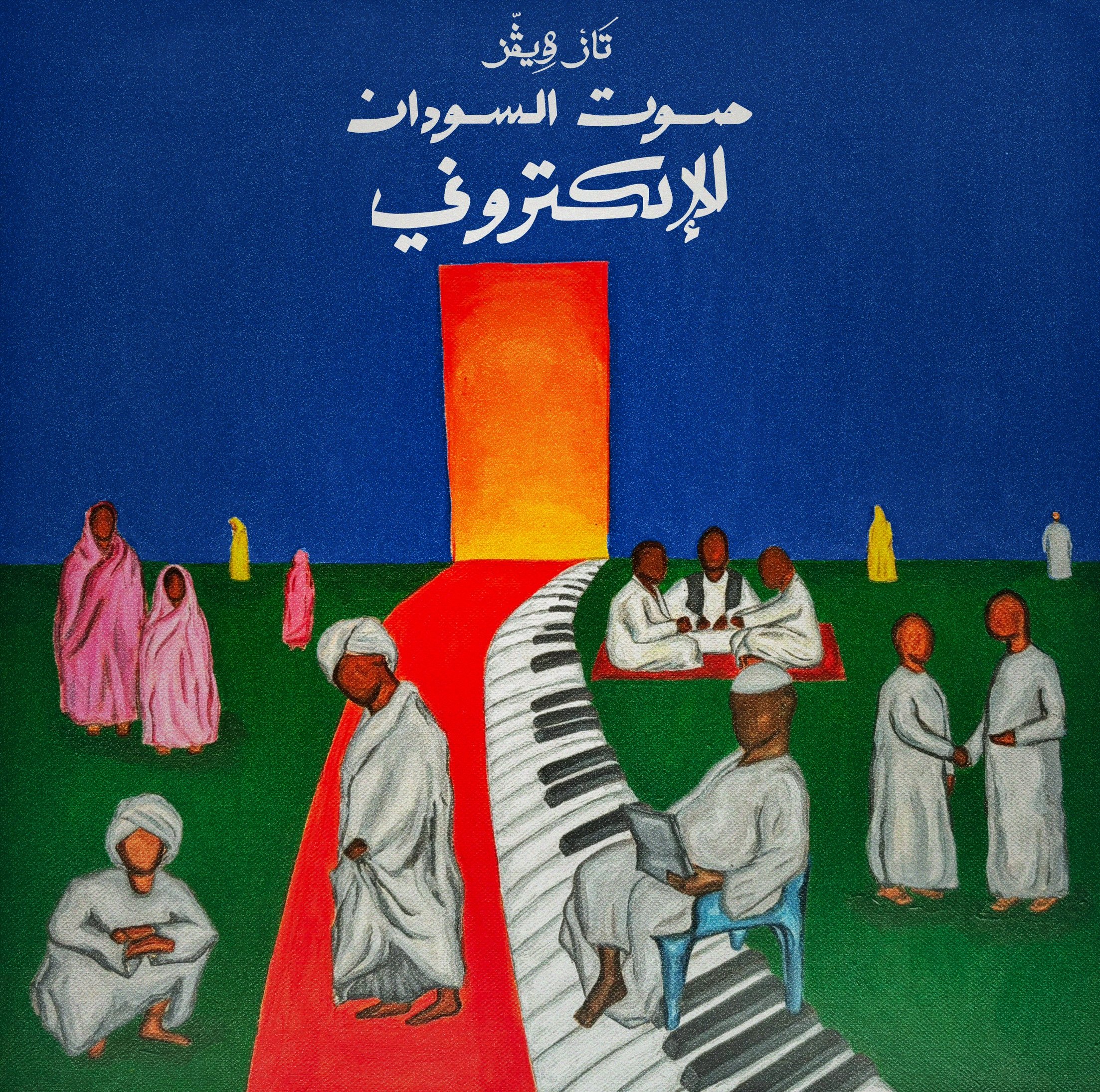
‘The Electronic Sounds of Sudan’ Album Cover, Artwork by Fatma Hassan
It is this premise that gives the album its remarkable range. There is music for dancing, music for stillness, and sounds that feel suited to solitude, meditation or the quiet of a long journey. Taz imagines its world as the sea, the desert, camels, traditional dances and the feeling of being alone with your thoughts. Listening to it, you get the sense that he is less interested in recreating Sudan exactly as it exists than in asking what Sudan can sound like when memory is allowed to dream.
This also explains the album's biggest departure from his earlier work. Taz was once and still is a highly skilled sampler. He could make a beat from an existing recording in minutes. But eventually, being good at sampling stopped being enough. He wanted to make the sounds himself. He taught himself sound design, studied synthesizers, learned how instruments work and began making instruments of his own using calabash, sticks and PVC pipes. His first flute, he says, was made from PVC. The shift did not come from one dramatic moment. It came from dissatisfaction. “I always have the feeling of wanting to do more,” he says. “Like what I do is not enough.” That restlessness runs through his creativity. Taz now seems driven less by the desire to perfect one particular sound than by the need to discover what else he can do. It is why a keyboard can become an instrument, a calabash can become part of a sound system and a laptop can become a studio. “It’s never been about the gear that you use,” he says. “It’s about the artist and the vision.”
Underneath all this experimentation, though, is history. Taz is fascinated by the Yamaha PSR keyboards and Technics KN-2000 that became important to Sudanese musical culture, particularly within Zinniq, a dance-oriented genre popular among young people. The keyboards offered an affordable alternative to full bands and became part of the musical memory of a generation. They are evidence of how technology, economics and culture can meet to create something distinctly local. And perhaps that is what he is doing with electronic music now: continuing that conversation. There is another reason preservation matters to him. Sudan has lost enormous amounts of its cultural archive through upheaval and conflict. Music has been lost. Films have been lost. Elements of cultural heritage have disappeared. Taz has come to understand that creating can also be a form of documenting.
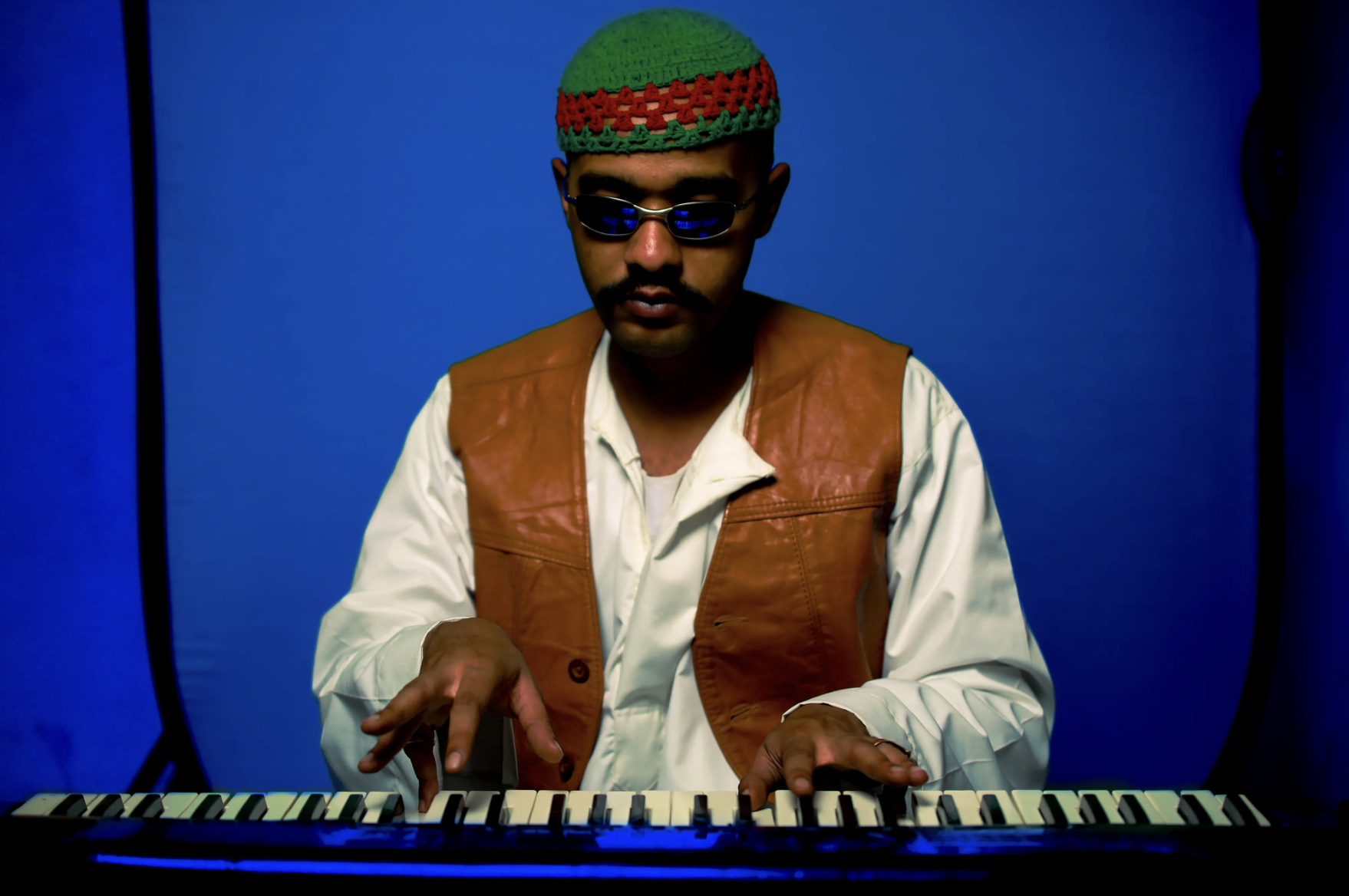
Taz Waves photographed by Ahmed Tmsah
That is why he insists on calling what he makes “Sudanese electronic music”. Not house. Not R&B. Not ambient. Those genres may exist within the music, but they do not define its origin. The distinction matters because he does not want to wait for somebody else to discover Sudanese electronic music and decide what to do with it. That conviction led him to create Basinkob, his own record label. “I want to be the one who is responsible for promoting my own music,” he says. “I want control in my own music.” For now, Basinkob is a home for his own work. He says he has around three hours and 40 minutes of unreleased music waiting to come out over the next five years. Eventually, he hopes the label will become a home for other artists too, but there is no rush.
Even after making an album this ambitious, he does not speak like someone who has found the answer to anything. When asked what he is still searching for, he admits he does not really know. “There is no answer, really. Something new perhaps?” ‘’The search ends only when the traveller is no longer on Earth,’’ he adds. He is simply doing what he loves. Every day, every week, every year, there is something else he wants to learn, build or achieve. That impulse has carried him from painting to photography, fashion, hip hop, electronic music, sound design and instrument making. It has taken him across countries and into sounds he had never imagined making, and it has brought him back to Sudan. Not necessarily the Sudan that exists on a map, but the Sudan that exists in memory, rhythm, family, language and inherited sound.
When he talks about the finished album, he speaks about the lessons it taught him. ‘’Nothing lasts forever,’’ he says. ‘’Happiness does not last. Difficult periods do not last either. Life moves between them.’’ Perhaps that is why The Electronic Sounds of Sudan never feels completely settled. It is a record in motion, as is its creator.