Roooted In The Spirit Of Friendship, Mura’s Debut Album, ‘Murata’, Is A Celebration Of Kenyan Electronic Music
“That’s also my song playing,” Mura says as we settle in for our conversation, nodding toward the DJ downstairs. We are on the upper floor of The Canteen in Lavington, above a humming crowd of his peers and industry figures, and I have finally caught him for a quiet moment before his manager swoops in to rush him to the next thing. Mura, a lean figure with long locs and dressed in a green shirt and bright orange bandana, is the man of the moment tonight and time is of the essence. The track is “Rejea,” from Likizo, his collaborative album with Big Nyagz that was released in July 2025. He says it with a slight grin and needs no follow-up. It is an acknowledgement of his work ethic and output. A short while before the world gets its first listen to his debut solo album, the room is already running on his work.
I had arrived hours earlier expecting an empty venue and found a room already filled with some of the biggest names in the Kenyan Afrohouse space. Onedown, the Aduma head honcho, sat alone hunched over a laptop. Big Nyagz, a frequent Mura collaborator, and Sendz, one half of the electrifying duo Sendat, sat together deep in conversation. Everyone was dressed to the nines, and anyone who was anyone in the scene seemed to be there, pulled in by Mura’s gravitas. As the room continued to fill up, every new person made a beeline for Mura, acknowledging him as the star of the show, at least for that night.
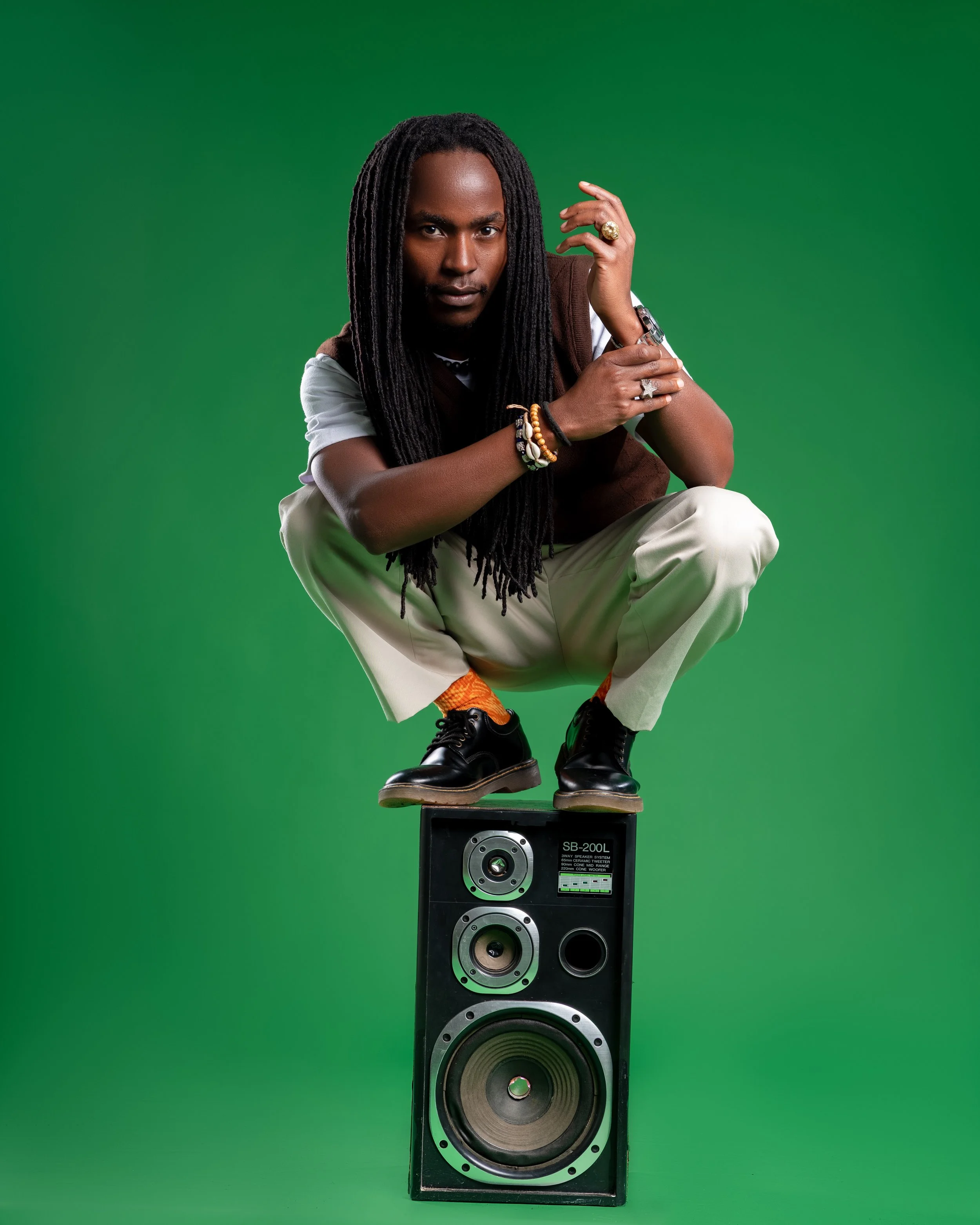
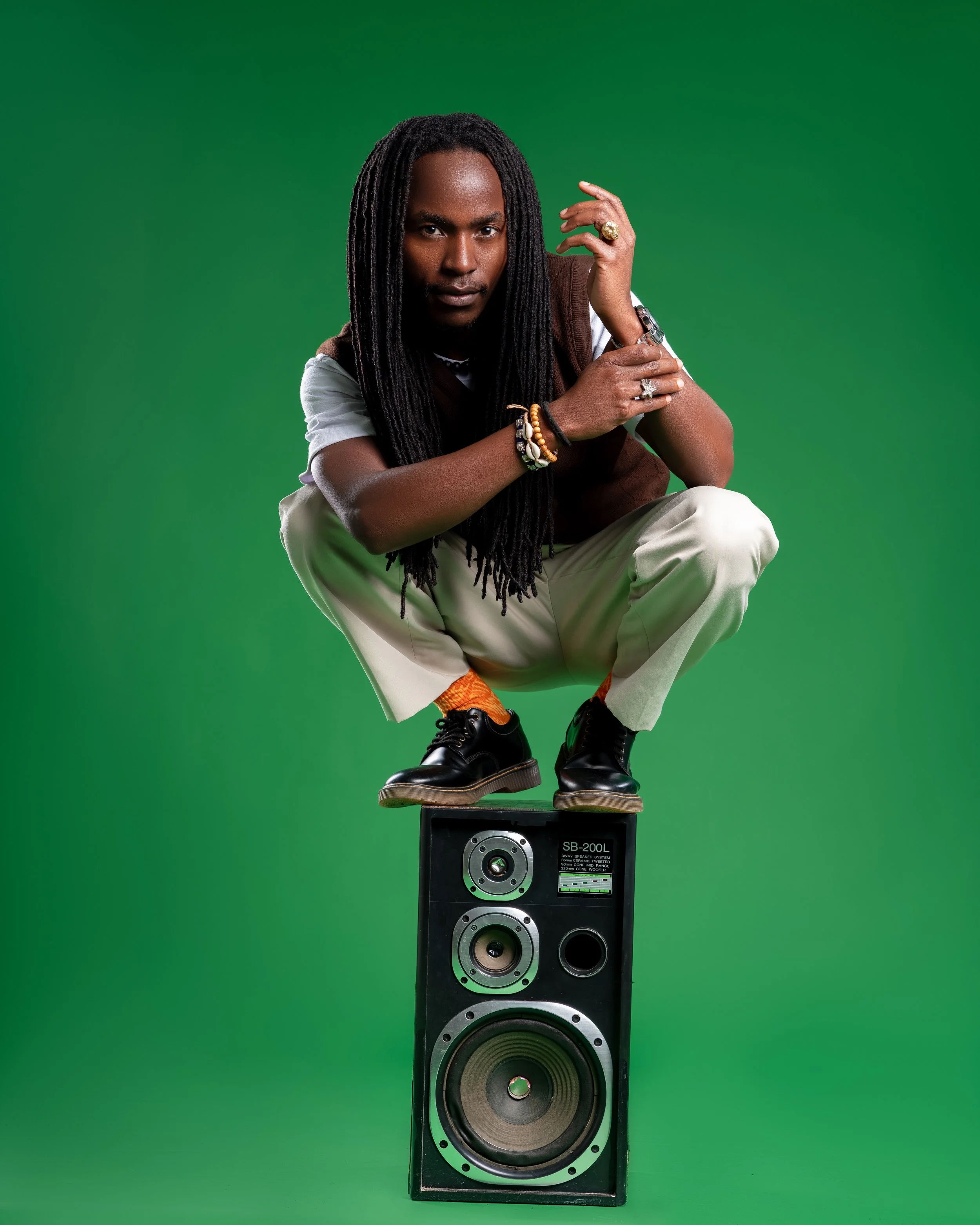
Nairobi-based DJ and producer Mura
Mura, real name Dennis Mwaura, says his music story starts with a guitar that was frequently held by his grandfather. As a boy he watched his grandfather coax music out of it, and it felt like magic. He didn’t pick up an instrument right away. Instead he played football, joined extracurricular activities and let the idea of music sit in the back of his mind. It finally took shape in high school, when he joined a music and dance play that went all the way to the national level, his first time actively taking part in music instead of just listening to it.
Electronic music became more and more enticing as he continued to learn more about music, he says as we continue to talk. He was drawn to its energy and its sense of invention, and to Major Lazer in particular, whom he saw as sonic architects and wanted to emulate. His foray into making his own music started with mashups for his DJ sets, then he taught himself production with guidance from friends, YouTube tutorials and long hours in his bedroom.
The records came in stages. His debut EP, “Excuse My Language”, which is akin to lost media these days, earned double Afrima nominations in 2017, a great step forward in the recognition of his work. In 2020 he released “Kingship,” an experimental record he describes as him still trying to find his own sound. “Hutia”, a single with DJ Ally Fresh and folk fusion artist Ayrosh, followed in 2021 and spawned Amapiano and Afrotech remixes from a variety of artists in the scene. “Murastar Vol. 1” and “Murastar Vol. 2” arrived in 2022 and 2023 respectively. Throughout this time his music continued to evolve with him, layering Afrohouse with genres like Afropop, Ohangla, Benga, Mugithi, Chakacha and much more. This experience and evolution of sound is what has led him to this exact moment.
“Murata” was not a straight road. Mura scrapped the first version of the album and started over, pushing it in a new sonic direction and moving the release from a March window to October. There was doubt along the way, he says, enough to make him retool the project midway, throw out the sound and vision he began with, and start again. The delay was the price of his perfectionism. For the past few years he has been a collaborator, working with a wide range of acts on the Kenyan scene in a process where everyone brings their own input. This time he took the reins fully for the first time, serving as executive producer and mixing the entire project himself, with mastering by Mike Manitshana. “I knew exactly what I wanted for this album because I have been working on it by myself and it is the culmination of my experience so far,” he says. Working alone, he adds, is easier than a collaboration because different creative processes can create friction: “A solo project is easier than working on a collab project because it is like giving an artist a blank canvas, they can make what they want.” Does he feel good now? “I feel good at the moment,” he says in between chuckles, “because the process of making the album has been very hard and I am glad it is done.”
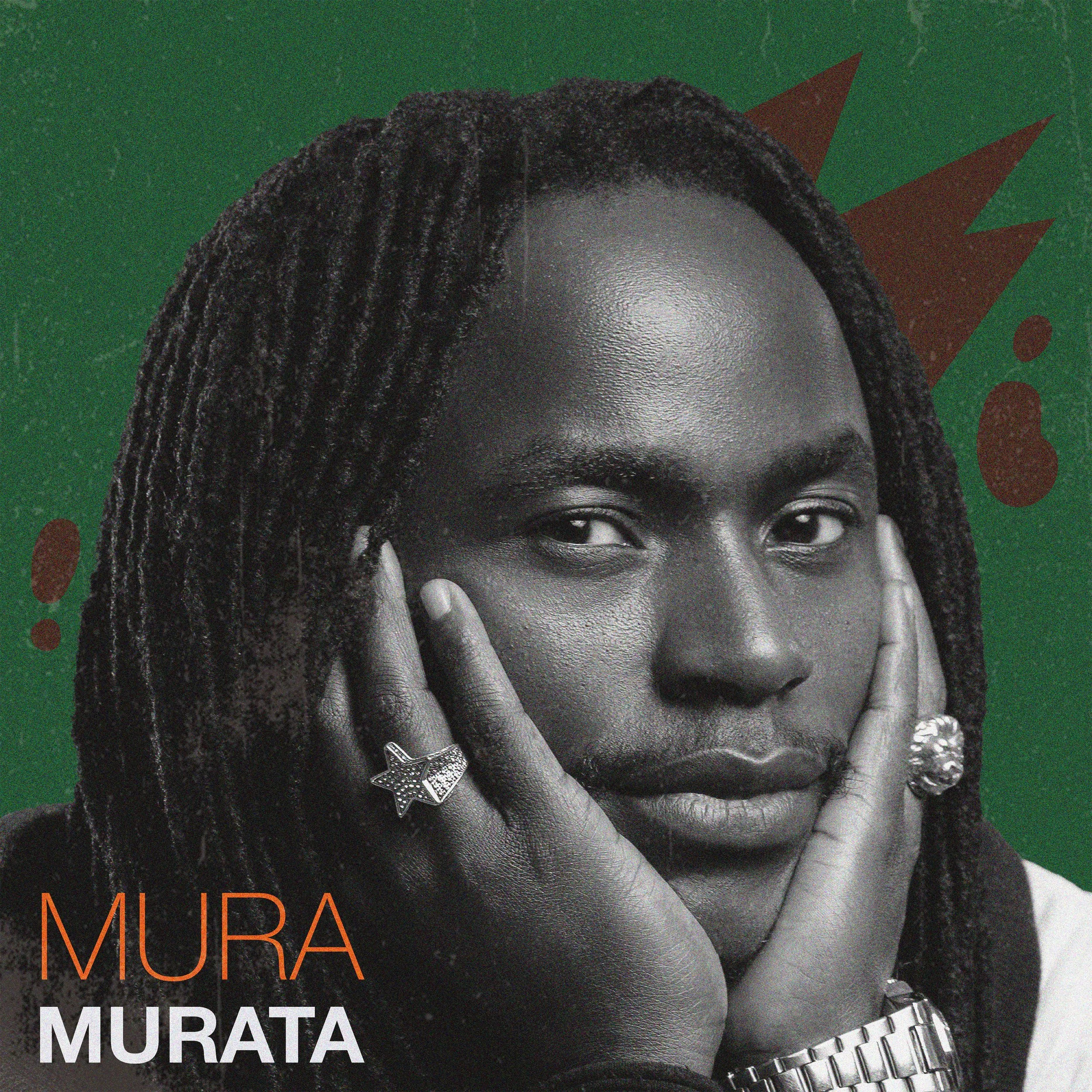
‘Murata’ Album Artwork
The spine of the album is his brand of Kenyan Afrohouse, unhurried and patient, the kind of groove that starts with an understated drum pattern before the first vocal arrives, then builds to an explosive crescendo. He says he sequenced the album the same way, softer tracks first and the more expressive material later. The opener “Nakuwaza” is lighter than what follows, and it plays like a glimpse of Mura’s intimate knowledge of Kenyan pop sensibilities, merging cutting-edge afrohouse with the saccharine melodies that dominate the airwaves. His ability to toe the line between radio-friendly music and deep afrohouse alchemy is why he has become a production darling of some of the scene’s biggest acts.
That balance is exactly what Onedown, the man I had found hunched over his laptop, points to when I ask him about Mura. He says Mura shows it is possible to stay loyal to your own sound: the music may be Afrohouse, but it is still authentically Mura, and that is why it has crossed over to different audiences. The history backs him up. Mura, who has been making music for almost a decade, has been blending traditional East African sounds with electronics since his time with the Bengatronics Sound and System collective, and a member of Kabisa Sound, a project joining artists from Rwanda, Uganda, Tanzania and Kenya through Germany’s Goethe Institute. Mura’s ability to soak in so many different sounds and genres is his ace in the hole. “I spend time listening as much as I can because there is always something to learn in music,” he says. It is evident that even as so many people hold him as a bastion of Kenyan Afrohouse, Mura still sees himself as an artist with a lot more to learn.
This matters at a time when the growth of Kenyan afrohouse is being measured against the South African sound. Mura says the album’s showcase of different artists will help create a sense of validity for the fledgling Kenyan scene. “We are in the process of making something great in Kenyan oontz,” he adds as our conversation continues.
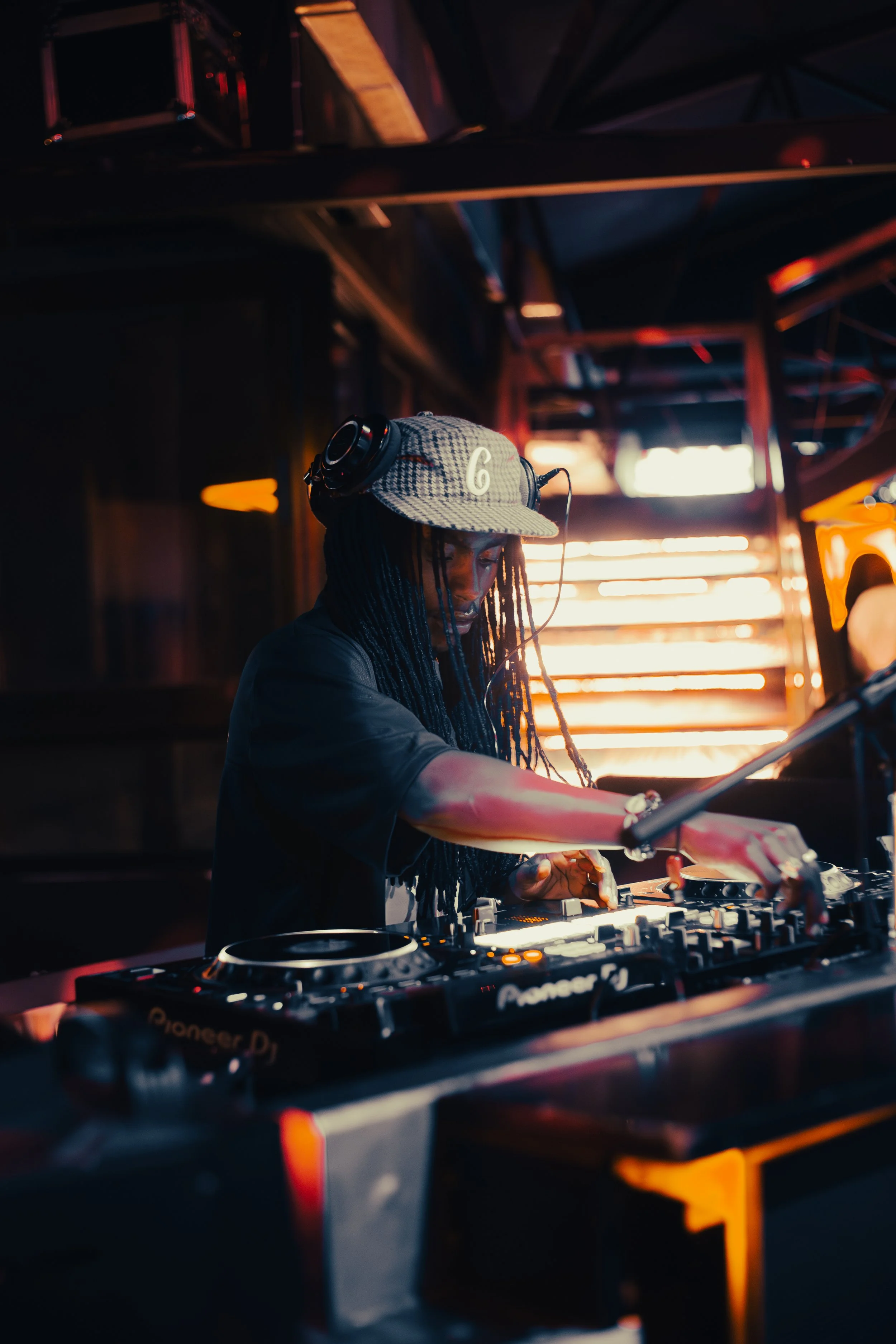
Mura performing
Over the course of the record he layers what he has collected over the years: Kenyan melodic and rhythmic touches, soulful hooks, thick stacks of vocals, vernacular lyrics and organic instrumentation that keeps the electronics warm. The base feels familiar from track to track, but the sonic construction around it is different each time. The title itself, “Murata”, means “friend” in Kikuyu, a language that has threaded through his work since “Hutia,” which carried Kikuyu vocals and instruments. Big Nyagz says Mura’s biggest gift is his ability to dissect and own his sound in a way that is distinctly Kenyan, “the best of Kenyan oontz,” he puts it succinctly. Nyagz appears on the album’s “Kata,” and has been a frequent Mura collaborator in the past.
Where “Likizo”, his previous release, was a coastal breeze, a record of islands you could visit in any order, “Murata” plays more like a tasting menu of the best Kenyan Afrohouse has to offer. It helps that one hand steers the whole thing. Mura produced and mixed every track himself, and the sequencing shows his experience at work: no song feels out of place. He also curates a guestlist that features so many of his frequent collaborators as guest artists, each of them occupying a small space in the greater presentation of the album. On a record called “Murata”, it makes sense that the themes that take centre stage are friendship, identity and relationships.
“Tamani,” the single that has been gathering momentum, is the expected earworm, but “Rehe Mbeeca,” featuring Nes Mburu and Bensoul, brought the room to life, a high-energy track celebrating the hustle culture of Nairobi. “Mwanake,” featuring Stacy Kamatu and Kato Change, had the room silent as everyone took in the melding of vocals and production. Topklass Sounds, the label behind the project, presents the album as essential listening for late nights, early mornings, dancefloors and road trips, and after a first listen it ticks every box.
A few names will be familiar to anyone who has followed Mura’s recent run. N’jiru, who sang on Likizo’s “Running,” is the first you hear on the album, and Udulele, a notable Benga voice and collaborator since “Nyumbani,” returns on “Kata.” Ayrosh returns on “My Lover” and the title track, and Ally Fresh, Mura’s partner on “Hutia” and the 2024 “Nyumbani” EP, appears on two tracks. Bensoul and Watendawili, who appeared on that “Nyumbani” EP, turn up again here, with Watendawili now one of the biggest acts in the Kenyan music scene. The guests bring colour and life to the songs, while the direction of the record and its sense of space stay Mura’s. Even the mastering, done at Topklass Sounds Studio, serves the vision he has for himself.
Asked about his favourite track, Mura won’t pick one. “I can’t choose my favourite song on the album, it is like asking me to choose the favourite among my children,” he says. “Every track is special in its own way,” he adds. When I ask him what the audience should expect from the album, he says they should listen for the growth in Kenyan afrohouse, right before he is whisked away for his next engagement. The man whose song was playing before the party began seems to be the one building the scene, and in usual fashion he did not do it alone.
“Murata” is out on October 16, streaming everywhere.