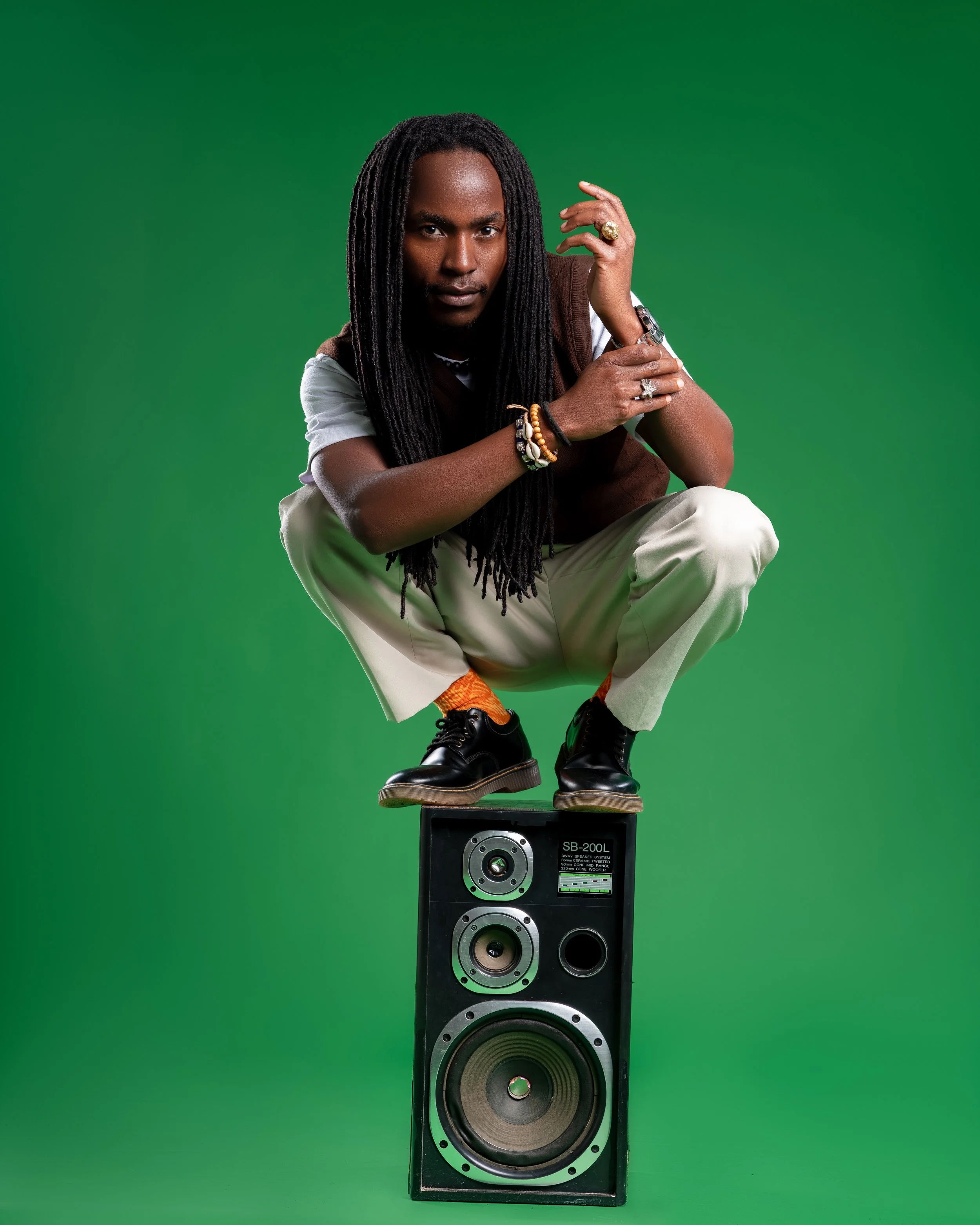
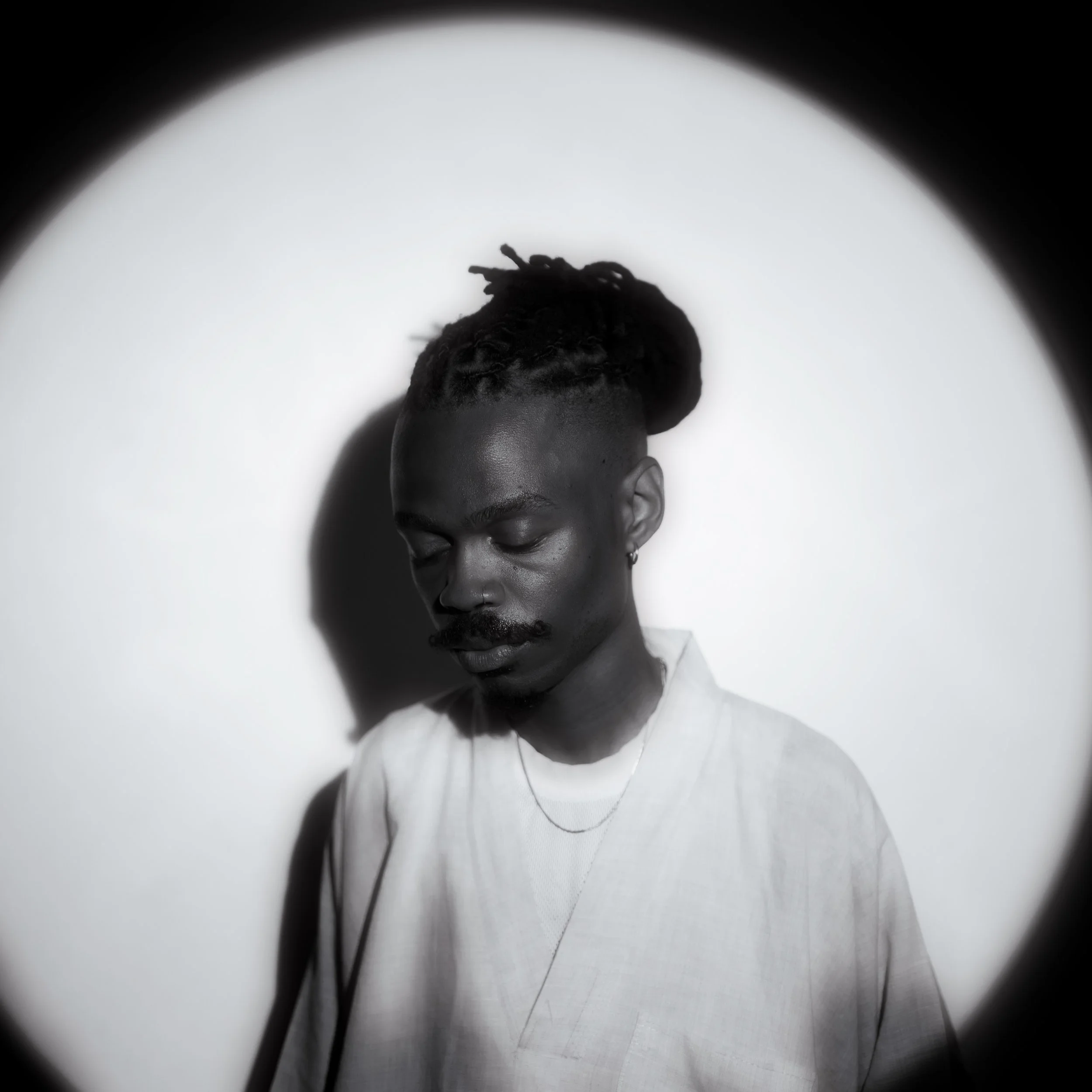
For Chris Barr, Finding His Sound Meant Reconnecting With His Roots
“I realise that as we grow up we lose the carefree nature of our young selves and replace it with a fear of being perceived, the lucky ones find their way back.” - Chris Barr
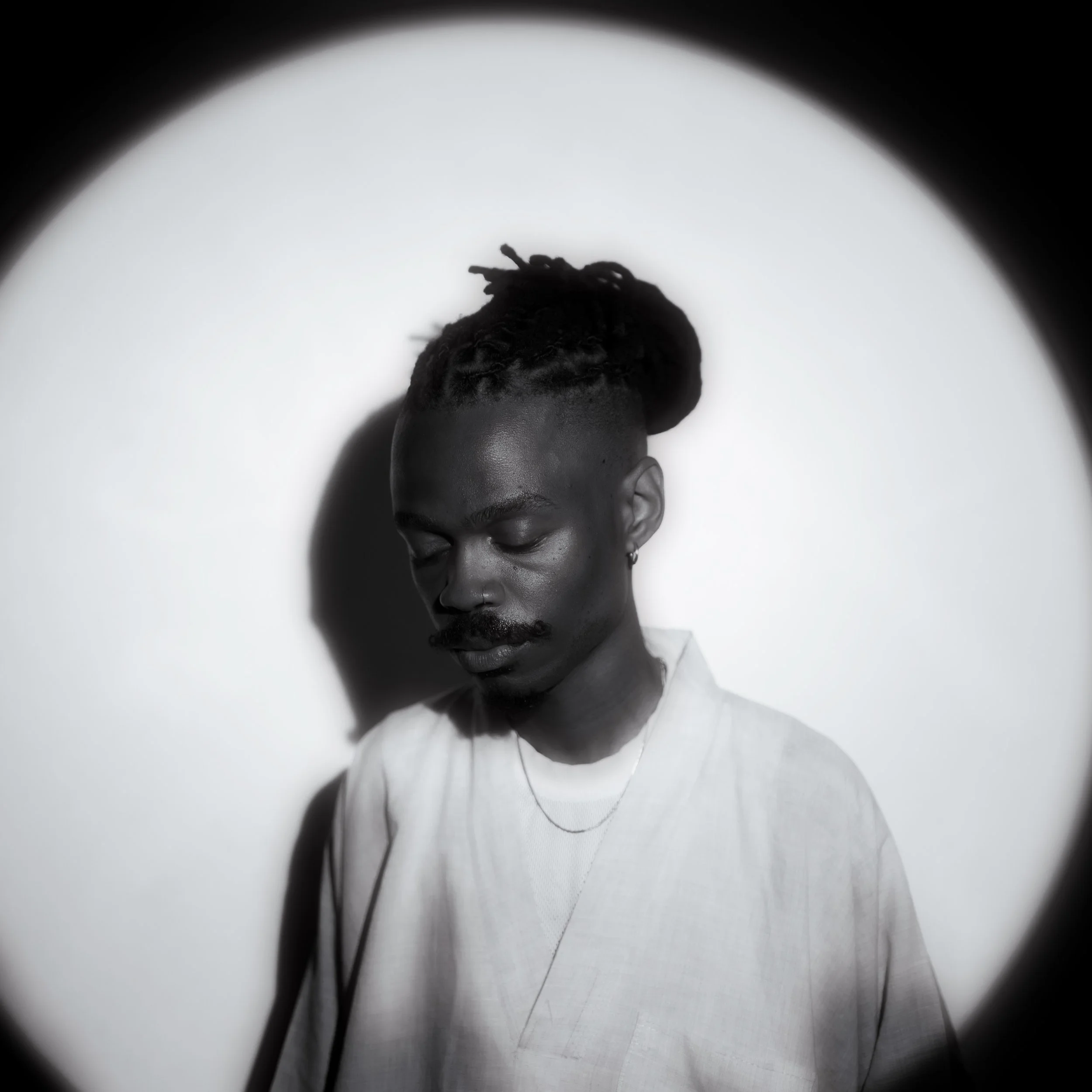
Chris Barr was born and raised in Mombasa, Kenya in a house that had no shortage of family around, but as he began going to school, he discovered that there was something different about his family. He developed an innocent curiosity about the absence of his father that put him in a constant state of imagination and that manifested itself through his art. “We used to draw a lot as children and I made paper crafts. As I kept doing these arts and crafts activities I started realising that I was good at it,” These artistic activities became his source of calm and quiet when his mind would wander and ultimately became the origin story of his multi-disciplinary artistic talents.
Barr moved to Nairobi to pursue a degree in Fine Art and Design at Kenyatta University. His entire life had been in Mombasa, surrounded by culture that is stereotypically associated with the coast, his calm demeanour and desire for a quite slow living standing out the most. Without him realising it, he began to shed some of what he had grown to know and be. His coastal accent began to fade and the way he dressed started to change, gradually moulding himself to fit Nairobi life.
In 2019, he joined the second season of Standard Media’s KTN I Can Sing. “I thought singing just involved singing but this competition helped me understand all the intricacies that go into the music business.” Before this experience he had treated music as a hobby and only signed up because he truly believed in his vocal abilities. He recalls the experience of writing his first song at that time, arranging music for performances, and understanding the possibility of taking on music as a full time career.
“I didn’t think people were actually watching the show because tapings would typically have about 70 people in the room,” he recollects. After the show wrapped, he watched that exposure open up opportunities for him to perform which proved to him that people recognised the power of his voice.
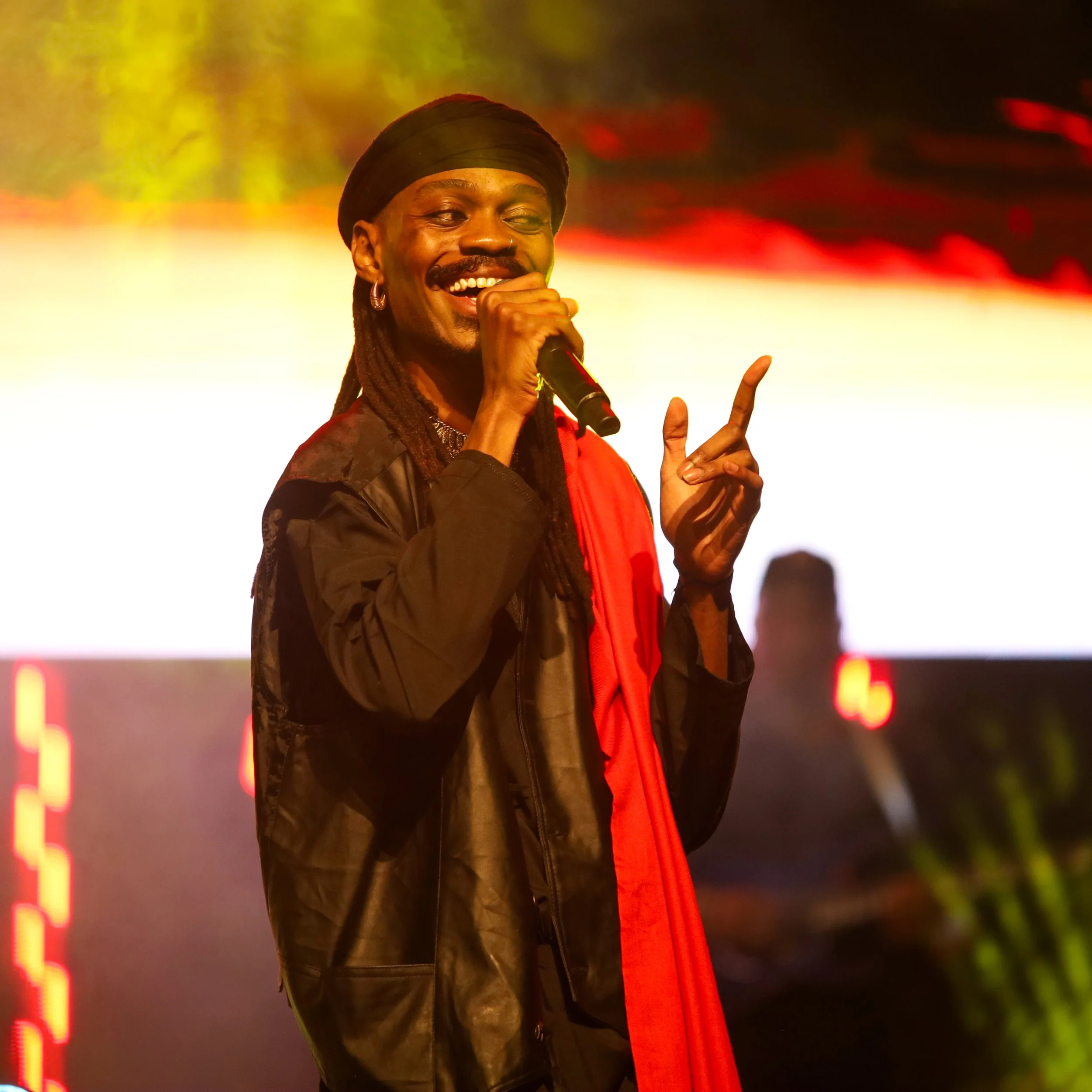
Chris Barr speaks to the power of the human voice as the basic way in which we use to communicate and as a sonic instrument that can be a conduit for whatever emotions the singer is feeling. He recalled growing up in Mombasa and constantly hearing the Adhan (the Islamic call to prayer) and Quranic recitations, and discovering the power that a voice void of instruments can have. These sounds became a source of calm and enjoyment for him. He hadn’t realised that he had subconsciously registered them as influences until he recently started leaning more into making Urban Taarab.
His first singles Slow and Like You, which he worked on with Waithaka and Giggz, were more Afro RnB leaning. As his music has evolved, so too has his appreciation for his cultural roots. Laiti, a single on Ally Fresh’s Swakacha Deluxe project, shows how much he has evolved both in his expression and use of vocals. “We tend to see ourselves after we have already done things.” This switch hasn’t entirely been strategic, he followed where the music took him.
He has been in a place where he feels more drawn to culture, defining it as “the set of things that introduced us into this existence.” It has extended to more than just melodies and use of language in his music. It’s now manifesting in the way he dresses, the food he makes, and the music he is actively listening to. “My music is showing who I am as a person in the moment and the space where I feel most comfortable.”
All of this is in an effort to return home. A return to ideals, beliefs, and practices that remind him of the carefree way with which he lived life as a child. He makes the same observation about other artists who make music or have created visual identities in appreciation of their cultural backgrounds. He is now being a bit more intentional in the creation of this persona and identity to reflect who he is now. All while understanding the impact that this has on audiences who continue to enjoy seeing the culture embraced. “People see us and are influenced by us , whether we like it or not… and this may challenge people to embody their authentic selves boldly and confidently."
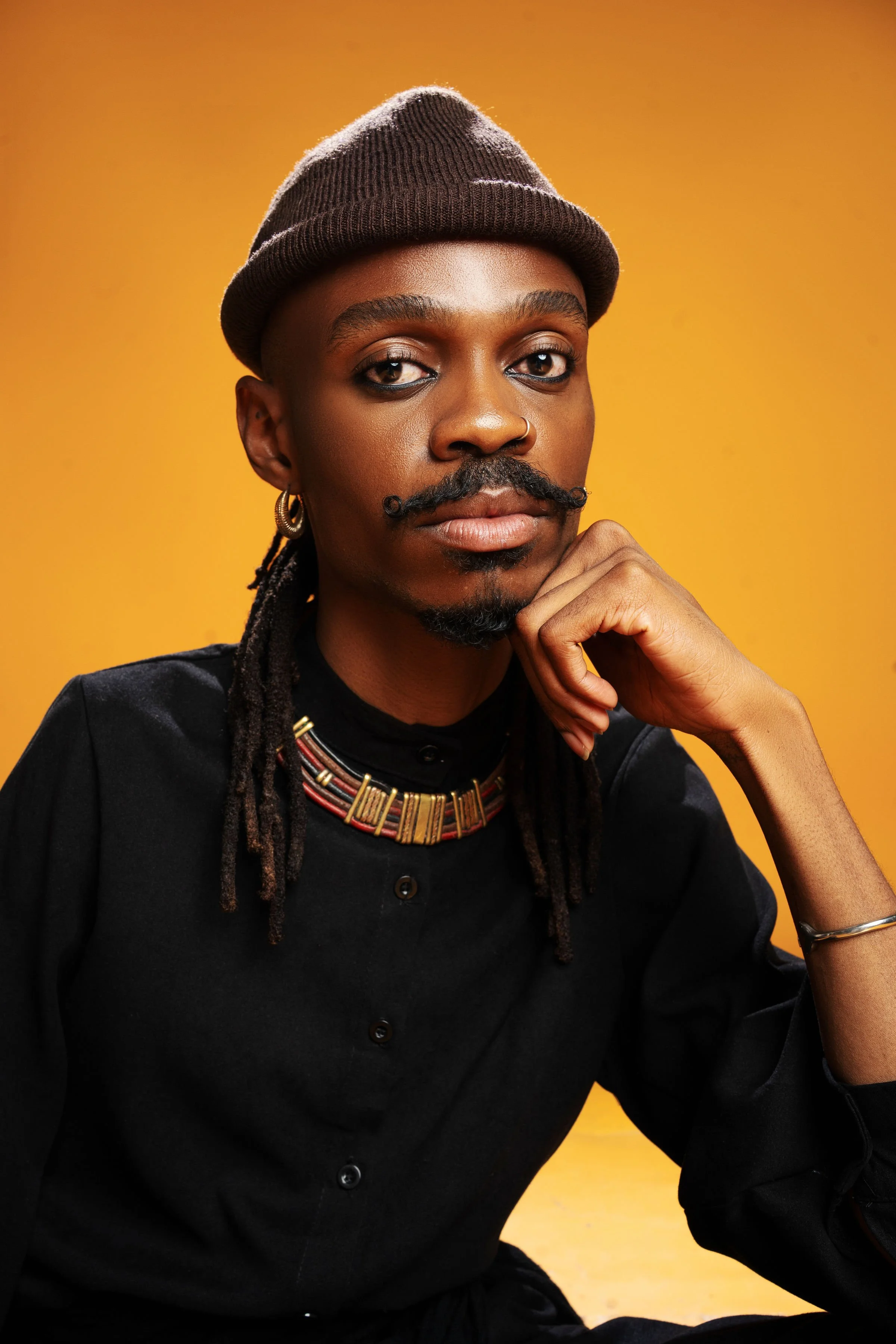
Collaboration has been at the center of his development. In 2025, Barr, Zawadi and Clark Keeng released Musings. This felt like a precursor to his participation in Base to Billboards, an artist development programme by Africa Centric Entertainment, Tusker and EABL that took a holistic approach to artist development, with the aim of forming a collective from its participants.. Chris Barr, Zawadi, Njuguna, Ras Amor, Mannaseh Shalom, Muringi Matheri, all of whom “had momentum in the industry” were selected to be a part of this program.
“The program was different because it offered solutions for gaps the artists have at that stage,” Chris mentioned. From songwriting to performance, legal, IP, and branding, the mentors had the intention of creating a sustainable career for them as individual artists and as a collective. The mentors included Bien-Aimé Baraza, Ywaya Tajiri, Lisa Oduor-Noah, Chikwere Onwukwe, and Marek Fuchs who all committed to seeing the goals of the incubator come to pass.
Barr reflects on the success of collectives like Kodong Klan. The way they have been navigating the industry since 2024 has already demonstrated the power of ‘crowd pulling’ fans from each member of the group. This also impacts not just the individual artists but also the entirety of the industry because there is likely to be more transparency about rate cards among the members. That standardised approach to payment ends up creating better earnings for all musicians in the industry.
The collective, Keteh, made their public debut at Wozaa World 2, the second edition of the live music event by Watendawili that took place in August of 2026. They are set to release their debut album ‘Safari ya Mapenzi’ in late 2026.
“I hope everyone who listens to my music feels encouraged to be themselves, not necessarily to chase perfection but to be authentic in the awareness of all their feelings and emotions. Embodying who you are in the moment and being confident to project that outward all while being in pursuit of being better.”