Musila Munuve’s Portraits in Motion
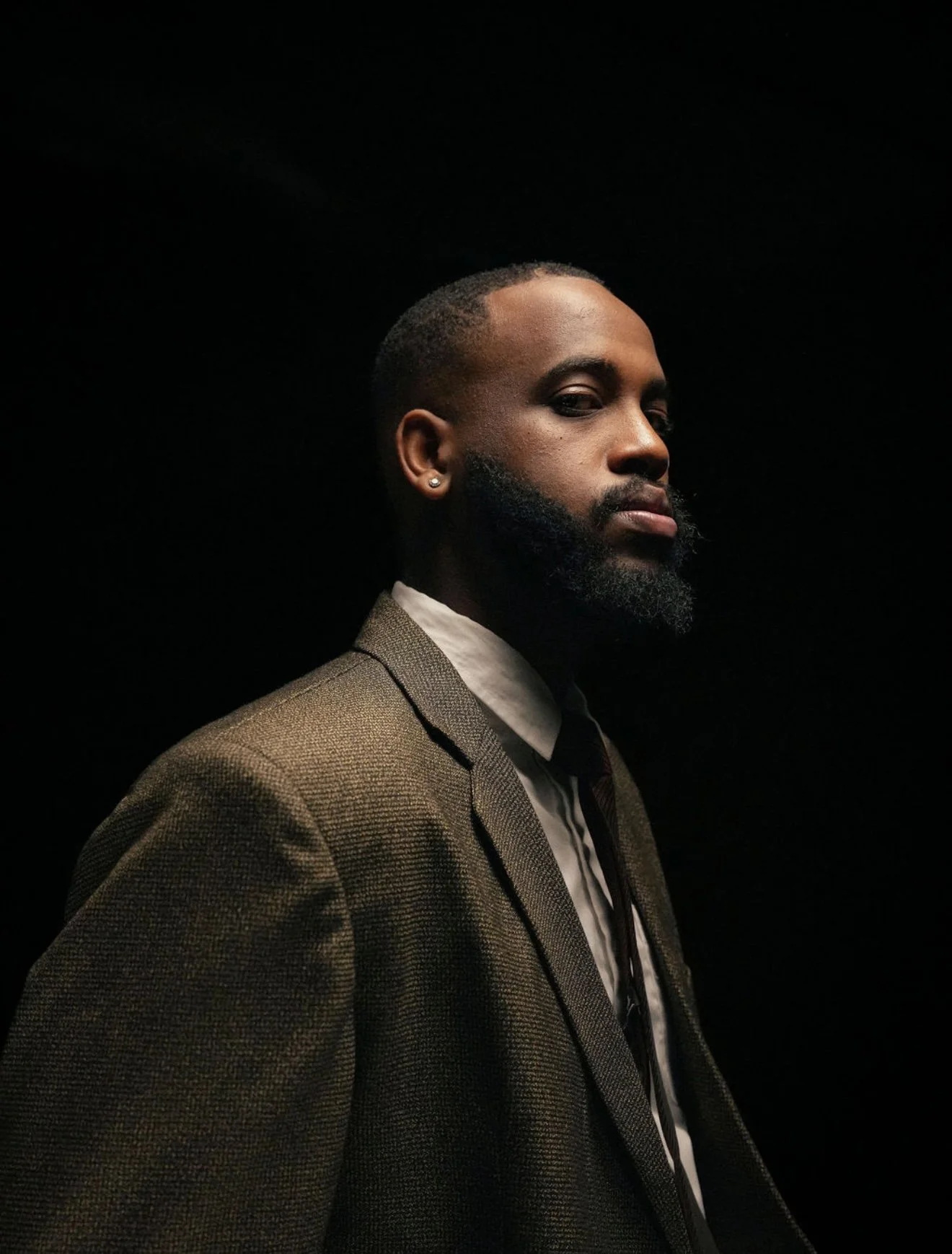
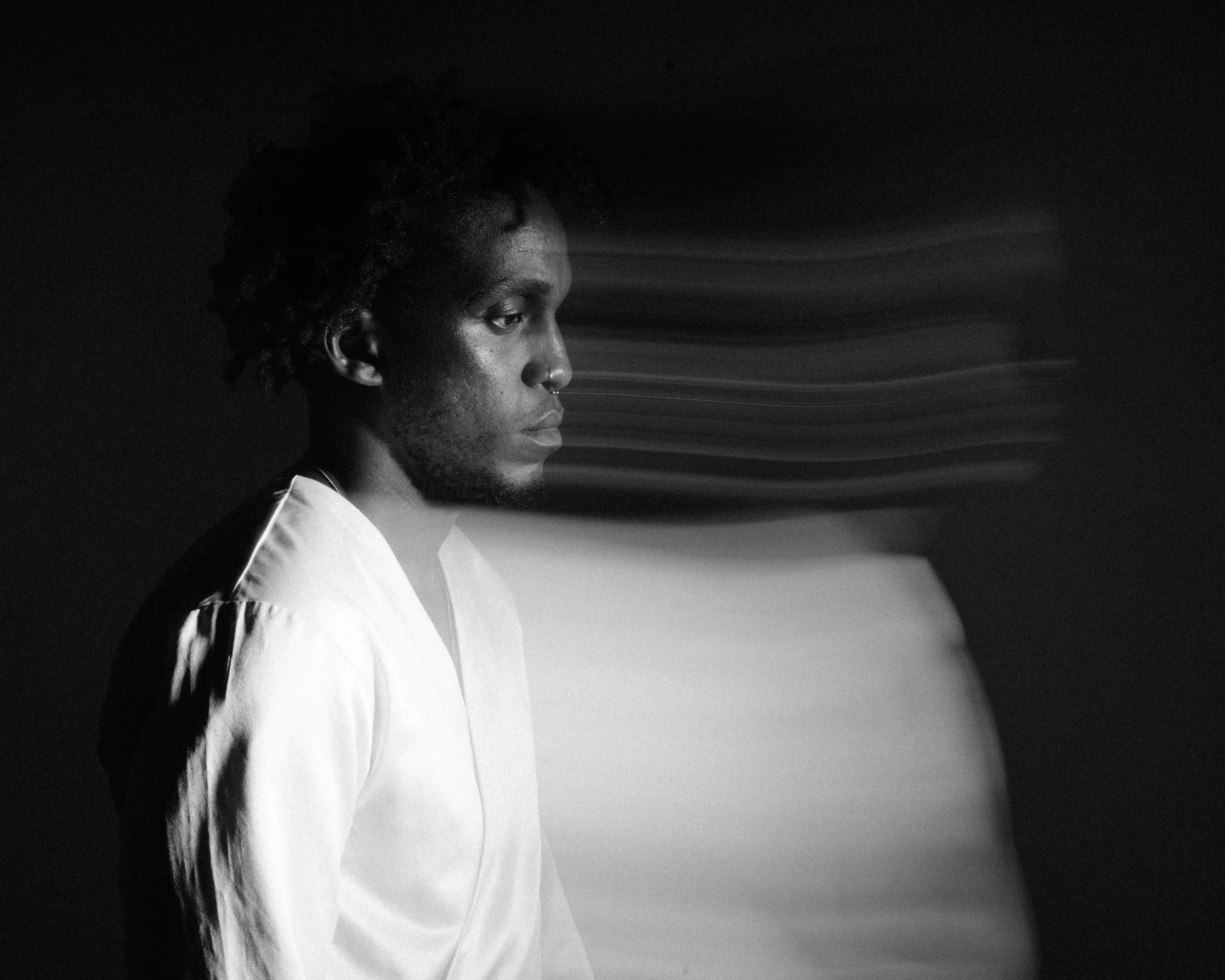
“I might make a film that is completely unrelated to me one day, but so far they have mostly been about my experiences,” Kenyan filmmaker Musila Munuve quips early on in our conversation.
After he graduated from high school Munuve launched himself into an involved photography practice that began with portraiture of his friends. He eventually transitioned into documentary photography, mostly of the Black Lives Matter protests he was a part of while pursuing an undergraduate degree in California. The artist’s dance between the two visual forms has been an ongoing one; through his now primary medium, film, he articulates the view that to visually document is to engage in a form of (self) portraiture.
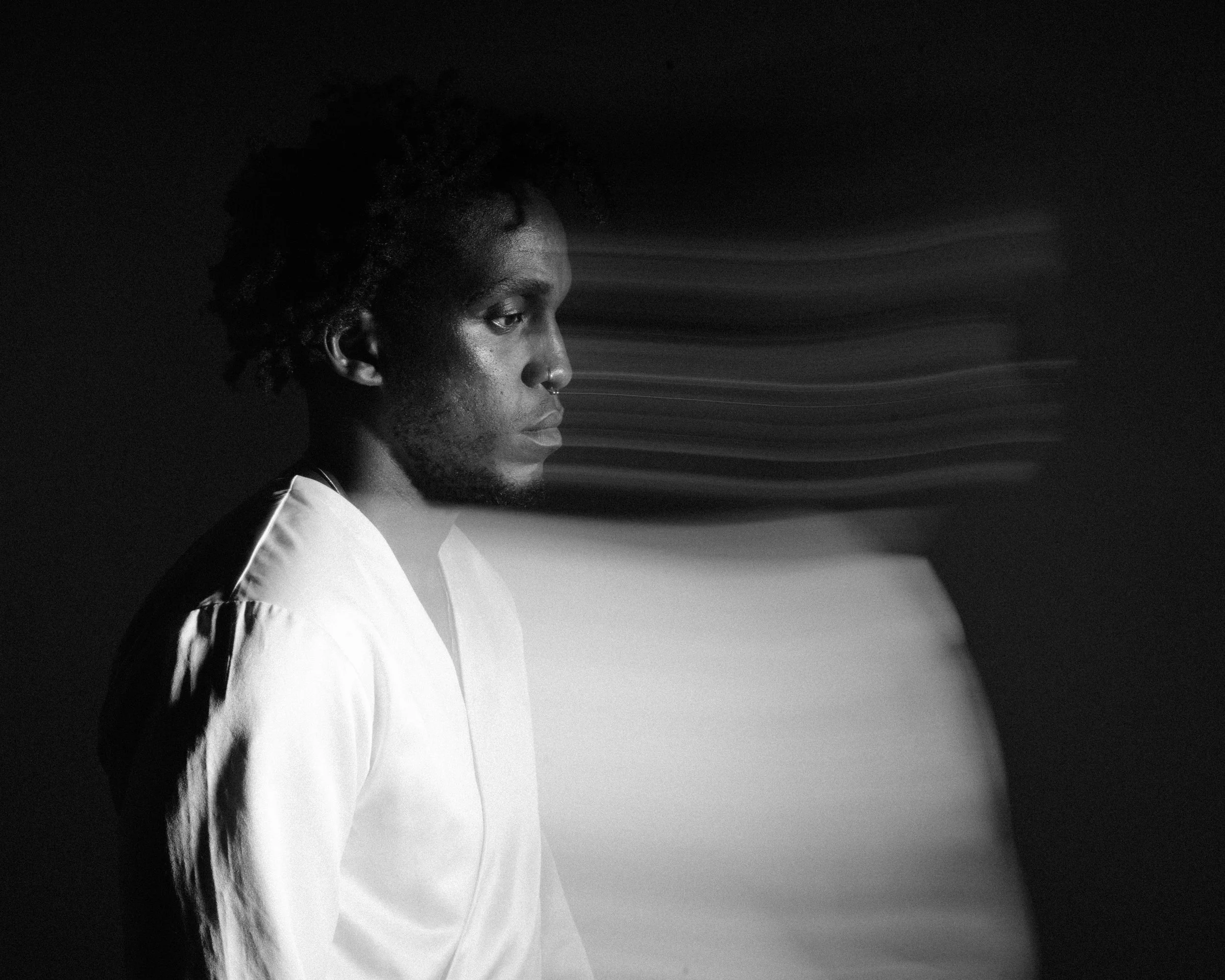
Musila Munuve, Photographed by Austin Leih
In Kujichora (2023), a self-taught tattoo artist is carving out a space for herself in Philadelphia. The thirteen minute offering builds a clear visual narrative of the subject’s identity; we are graciously let into her individual and family history, her motivations and her emotional state. Majuu (2023), a cutting exploration of a brother’s grief mired by distance, is particularly affecting because instead of simply documenting loss, it uses the processing of grief as a window into the protagonist’s character.
The filmmaker admits, “...the preoccupation with the protagonists’ emotions, I think, is a subconscious goal of processing those emotions for myself.” Munuve’s most recent project, Madawa (2024) - a film in which the party set offers plenty of distraction- is anything but perfunctory about its fixation with how the protagonist feels. Here too, the emotional canvas is a conduit for depicting his true self.
Musila Munuve, Photographed by Austin Leih
In this interview, we delve deeper into the idea of visual reflection in Madawa, which recently played at the NewFilmmakers Los Angeles festival. Munuve also shares his thoughts of film theory, non-visual art practice, and offers some insights into the next film he is working on.
Madawa is set in a party, joining this global canon of party films. Tell me a little about the choice of setting.
The party represents a period in my life where I was going out a lot and meeting all these artists in these spaces. So it was really important for me to have a lot of Kenyan music in there. I think parties, especially in Nairobi, allow us to be a vulnerable form of ourselves that you don't have access to in many other places, whether that's through substances or just through the shared space. And that's not a new idea. Like you said, there's many party films, and I definitely drew from a lot of them. I think Steve McQueen's Lovers Rock on Small Axe was a huge one as well.
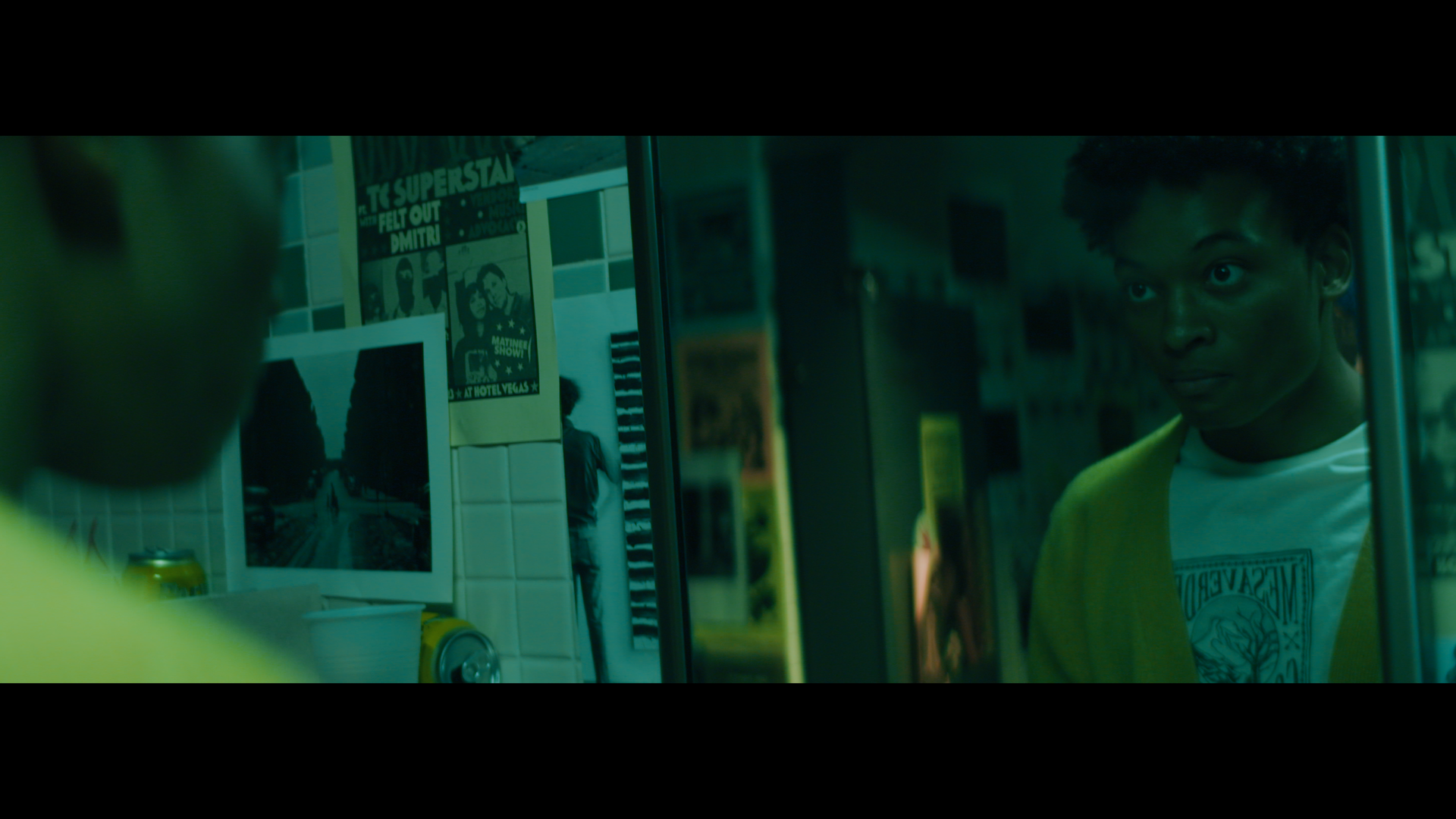
There is a wide shot with people dancing joyfully, which I found interesting because most of the film follows a very anxious protagonist. You see his anxiety most clearly when he is in the bathroom.
Yeah, I think the bathroom is the heart of the film and it's the space that we spend the most time in. When I was showing the film a few people were like, the bathroom is gross, why are we staying there so long? I think bathrooms afford you privacy but also a sense of intimacy. I wanted a space where he starts out by himself and is in his own head, and then almost symbolically, he lets this friend into what he's anxious about. It’s like a safe haven that he finds with his loved ones, within a party that can be a sight of joy but is also unsafe for him in many ways.
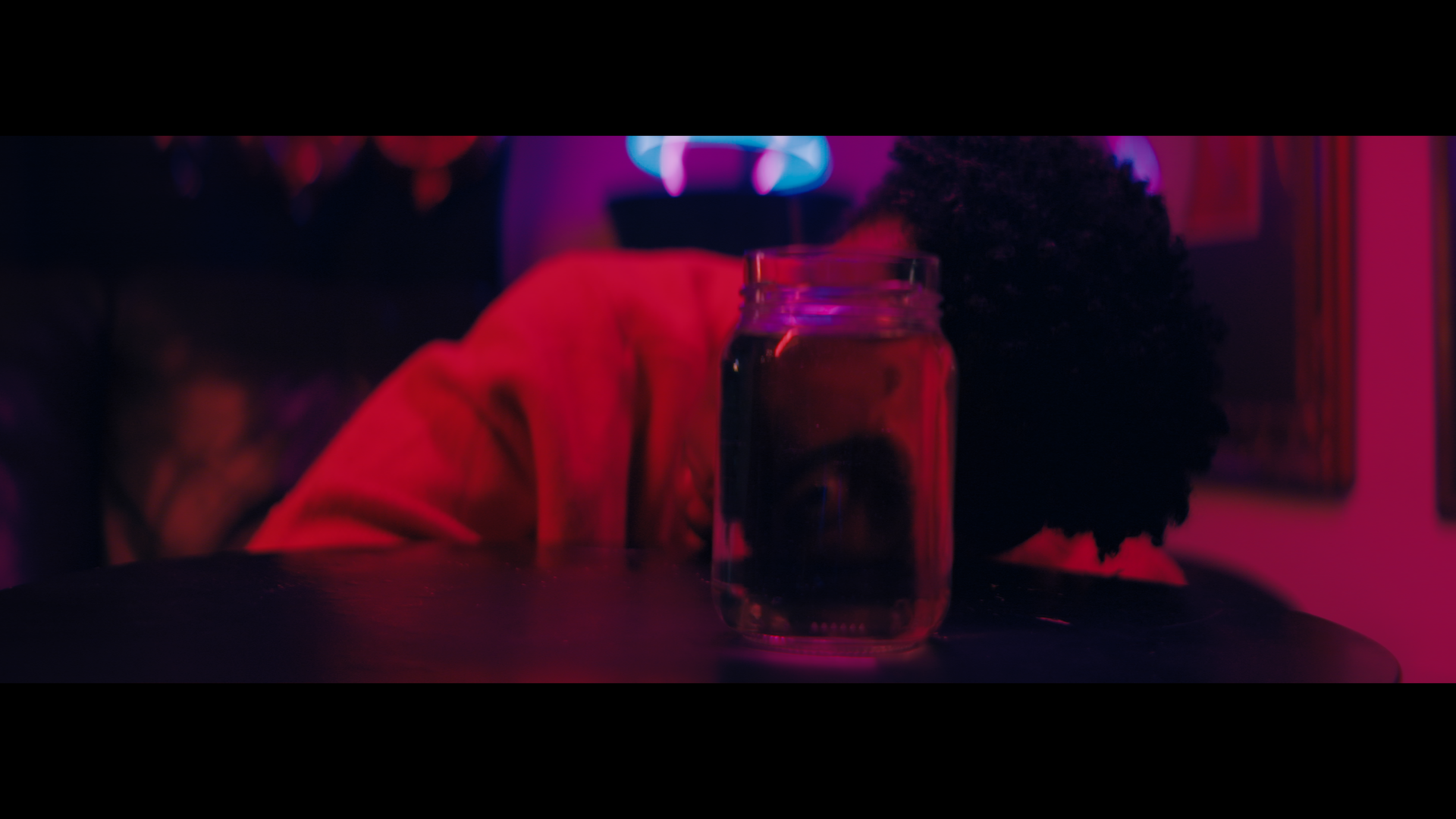
There’s a shot where we see his distorted image through a glass, which instantly communicates that he is inebriated. Are shots like that something you already have written into the script, or does the idea come to you when you're shooting?
I think the best moments are a combination of both. I worked with a cinematographer Indi Opzoomer, and early on, a question we thought about was, who did we want the audience to feel like? Do we want the audience to feel like an objective observer or do we want to be in the party with them? Do we want them to have judgment towards the actions that are happening or do we want them to have empathy? And we decided we wanted the camera to feel like a fourth member. The camera is handheld up until he leaves the party, to give you that sense of being alive, which goes against a lot of film theory that I've been learning at University of Texas, but feels more resonant to me and how I remember those nights. It doesn't feel objective or perfectly composed.
Still from ‘Madawa’
Does a lot of film theory encourage you to be more objective?
There's this idea of democratic filmmaking that says if you're pointing your camera at a specific thing, then you're telling the audience to look at that thing and not giving them a choice. But if you are wide and static, the audience has a choice on what they look at and in that way it's democratic. In theory, I like the idea of a democratic way of seeing, but there are certain images that were important to me in writing the script. There is a major theme of reflections in the film. The protagonist sees himself clearly in the beginning and then loses sight of himself as the drugs start to kick in, which is shown through the refraction of the light through the glass where he appears upside down. I really like the idea that you and your reflection are separate entities so in the end, when he's submerging his face into the water, he is in a way, bridging that gap. He is coming to terms with himself and understanding his anxiety, his relationship to substances as potentially unhealthy and connecting these two disparate parts of himself.
In three of your films, Kujichora, Majuu and Madawa there's a focus on the emotional state of the characters. I’m curious about the preoccupation with how people feel.
I think in many ways, the films are an exploration of how I feel and I don't think I hide it very well. Kujichora was made during my first semester when I was in Texas and it is about finding home in an unfamiliar city. If I really think about it, it was probably me reaching for my family in those moments. Majuu is a continuation of that theme. It came out at a time when being away from home felt particularly difficult. When you're young, you are much less aware that home will change and move on without you. Nairobi feels like it’s exploding. There's so much happening in the arts and in film specifically, and I'm not there. I’m seeing pictures of my niece and nephew who were born just before I came to Austin and calling home and hearing them ask when are you coming home? Madawa was much later after the emotional event, but it was pretty eye opening in terms of my relationship to my own anxiety and substances in my life and within my family. When you are making a film, you develop the script for a couple of months, you shoot it for a week or two, you edit it for six months. After sitting with that story for that long, you have no choice but to process the emotions that come up for you.
Still from ‘Madawa’
Another through line in your work is the fusion of American sensibilities with your Kenyan roots. Perhaps that is also a result of confronting the tension around being away from home?
Yeah, it does feel like a tension to me most days. I am faced with the reality of being in Texas and having access to a camera, to funding and to other student filmmakers and crew, but I am trying to make films about East Africans and Kenyans. So I have to find ways to translate those stories to the space I'm in currently. I think Madawa is the most successful fusion between those two realities because of how much the music shapes the film, and how I was able to include incredible Kenyan musicians in a way that didn't feel forced. It was a privilege for me to be able to make my thesis in Nairobi this past summer because it felt like I didn't have to make those compromises anymore. The film is about my parents and the youth led Kenya movement in the 80s, and the one that followed it in the mid 2020s. I remember during one of the rehearsals, I asked, so who here has been to a protest? I think only one person didn't raise their hand, so I didn't have to explain what teargas feels like or what losing your friends in the crowd feels like. Those are things that they just understood. And I got to work with young, talented Kenyans who had a similar mindset. So it has been a tension throughout but with different levels of success.
Tell me a little about the choice to center your parents’ story?
I saw this stunning music video of a song called Matatizo by Just A Band that I became obsessed with. The description of the song had a link to this book called We Lived To Tell- The Nyayo House Story. The book recorded the history of young people who were involved in the movement in the 80s, and I saw my dad's name. I knew my dad had been in exile, I knew he was an organizer, but in that moment I realised I don't know enough about what that experience was like. So I interviewed both my parents and that was uncomfortable enough because I was asking them about really difficult moments. But I'm grateful that they were able to open up to me about a lot of things. I turned the interviews into a script and sent it to both of them to read. My mom is more private than my dad is, so it was a bigger step for her to give me her blessing. But I knew I couldn't move forward with the film without it.
Musila Munuve, Photographed by Austin Leih
I'm so fascinated by the relationship between romantic love and love of a nation. They both require immense hope. What did you learn from making a film that engages them?
I really liked what you said about the through line of hope between these two things. I think it's hope in the face of, at least in the Kenyan context, almost insurmountable odds. In a way, the film is about my father’s character reckoning with the sacrifices that he has to make in order to be part of this movement, or to be a father, and the tension that lies between those two things. It is part of the logic of many authoritarian regimes to make struggle impossible. To be an activist means that you are constantly in physical danger, you're not making any money, your loved ones are always under threat. And I think that’s intentional, because, like you said, the two things are drawing from the same world. The fact that all these oppressive regimes focus on these intimate spaces shows that there is political power there. I'm about the same age as my dad was at the time that I'm depicting and my mom was way younger than I am. The fact that they were having to make such big decisions and be involved in these movements that shaped so much of my reality and of the country's reality is humbling. It gave me a sense of responsibility to my family, but also to the movements that I feel a part of.
Why did you choose to crowdfund for the film?
I did both crowd funding and grants from a needs based perspective. I was trying to get money to tell this film as accurately as possible. But also I knew I was going to be working with a Kenyan cast and crew and I was committed to paying them. It’s hard not to think about the strings attached to grants and collaborations with western institutions. There are many ways you have to shift your creative vision for these collaborations. I think self funding or crowd funding allowed me to stay true to that vision without compromising much, and it was a great way to get my community involved in the film. People donated locations, food and catering were donated, we had lodging that was donated. The community was part of this film in a way that made me realise how isolated I was during the other films.
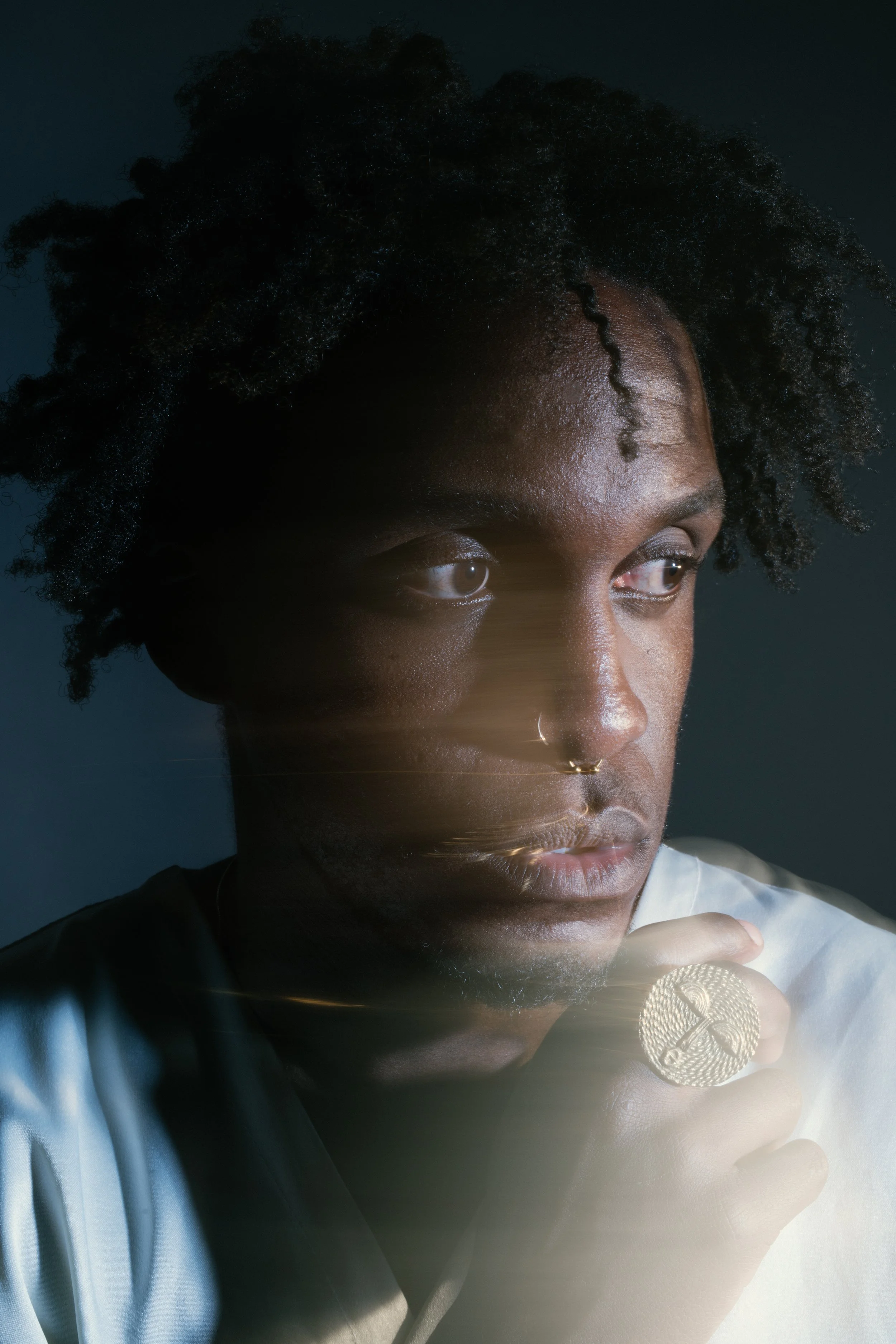
Musila Munuve, Photographed by Austin Leih
I'm curious if there is another art medium, possibly something removed from film, that inspires your work?
I have a very bad poetry practice. None of these poems should ever be read by anybody. But what I appreciate about poetry is the economy of words. Each word has to serve a purpose. Something about that feels resonant with film. Film is such an expensive art practice so you have to be precise. But these days I’m finding that less is more. The assumption that the audience won't understand so I need to throw something else in the lighting or in the costume, for me, comes from a place of insecurity. Similarly, in poetry, finding one salient word is better than throwing 10 words and hoping something sticks. So, I've been really moved by poetry recently. And I am curious what that will look like in my future work.
You know how everyone on the internet has been turning 30 and picking up running? I'm convinced that poetry is the artist’s version of that.
Yeah, you just wake up one day and there’s a Nikki Giovanni book on the bedside. But I wonder if it's partly because it's just accessible, you know? I think making art is really difficult. A lot of artists that I know are working two, three different jobs, and still having to find time to write a feature length script. I might not have that, but I might have some time to write a poem.
What is a film that you watched recently that left an impact on you?
I saw Nickel Boys last year and that really floored me. I think it's so unflinching in its storytelling, both in its use of form but also in the performances and in the writing. It felt like something I had never seen before. It came from a filmmaker who comes from a visual art practice and who is not trying to at least explicitly make it in Hollywood. So it was very focused on the best way to tell the story. There's so many things about the way he made that film that feel like things a professor in film school would tell you not to do. There's moments where things go out of focus, which could be seen as a technical fault, but a lot of times when things go out of focus it’s because they're too close to you. To me, that gives you a haptic quality, a texture. It's really expanding how we can communicate within these technical shortcomings. I could talk about that film for hours, I even wrote a paper on it. And I got to meet RaMell Ross, which was great.