
Wana Muthama Is On A Mission To Redefine African Narratives With Blueprint
In Nairobi’s buzzing creative scene, few platforms have captured the urgency of documenting and shaping the African creative scene quite like Blueprint. At its helm is Wana, a designer whose journey from hospitality to fashion, product, and interior design has been marked by a deep curiosity about how we occupy and transform space. Her studies in Italy exposed a glaring absence, the near invisibility of Africa in global art and design narratives, an erasure that would later spark her mission. With Blueprint, Wana is not only challenging the narratives that have long excluded Africa, but also laying the groundwork for a self-sustaining ecosystem where knowledge- sharing and collaboration take root. Speaking to TANGAZA Magazine, Wana expounds on her conviction that the continent must document, teach, and celebrate its own creativity on its own terms.
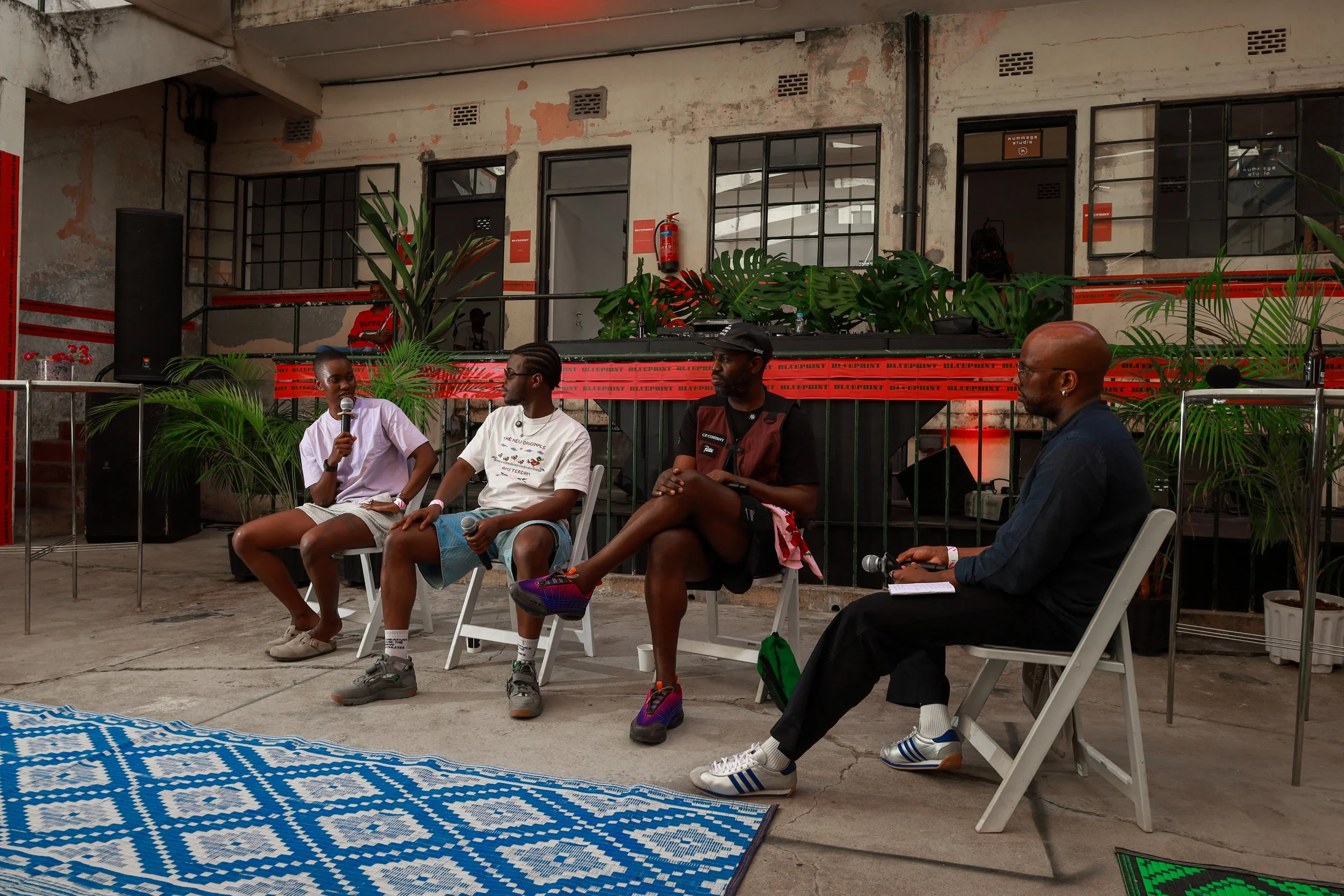
Panel at The BLUEPRINT Experience, December 2024
Who is Wana?
I’d say I’m a designer who comes from a hospitality background. I spent most of my twenties working in hotels, and I think that’s where my love for design really began; being surrounded by beautifully curated spaces made me more aware of how powerful design can be. I’ve always been fascinated by space, and how we choose to fill it. I actually started out in fashion design before shifting into product design. But even then, it wasn’t in a purely commercial sense. It was more experimental, more about understanding how objects and materials interact with the spaces we live in. I studied hospitality, and later interior and product design in Italy. While I was there, I realized just how absent Africa often is from global design conversations. In Italian design history, for example, there’s so much focus on materials, but hardly ever an acknowledgment of where those materials come from. And so many of them come from Africa. That realization became a big part of why I do what I do now with Blueprints.
Blueprint has quickly become a touchstone for the creative community in Nairobi and beyond. What first sparked the idea, and how did you turn that spark into a platform?
The spark really came when I was studying design and realized that not a single Black person was ever referenced in our design history or theory classes. Everything was so white-focused. Coming from Kenya, I knew that couldn’t possibly reflect reality.
That experience made me realize just how big the gap was. If Africa wants to be part of the global design conversation, then we can’t wait to be invited, we have to build our own ecosystem. Because what the West has shown, time and time again, is that they’ll only spotlight a select few “chosen ones” from the continent. And even then, the first thing they do is take you out of your environment by flying you to Europe or the US for residencies, workshops, or fellowships.
The problem is, so many artists I know have shared how difficult it is to create in those conditions. It can take them weeks or months to feel comfortable enough to even start producing work. So I thought, why not create spaces here, on the continent, where people can collaborate, access funding, and grow their careers without having to leave the environments that inspire them? That’s how the seed for Blueprint was planted. I wanted it to be like a “school of hard knocks” where people who’ve navigated the industry can share their knowledge with those just starting out. At its core, Blueprint is about building community, supporting each other, and proving that we don’t need to leave Africa in order to thrive creatively.
The name Blueprint carries weight; it suggests foundation, guidance, even a master plan. Why did you choose it, and what meaning does it hold for you?
Coming from a design and architectural background, the word “blueprint” felt natural. A blueprint is the foundation where everything begins, the plan that guides what gets built. For us, education is that foundation. It’s the base on which real growth and transformation in the creative industry can happen. So the name felt fitting: Blueprint is about laying down strong roots, strengthening the groundwork for the industry, and giving people the tools to build on solid ground.
Did you imagine Blueprint as a multi-hyphenate platform from the start?
Not at all. That’s something it evolved into over time. When Blueprint first started about two years ago, it was really simple. We were just interviewing Kenyan creatives who were doing interesting things. We put out a five-episode series, and then things went quiet for a while. Later, I had the chance to travel to Amsterdam, and that trip became a turning point. I realized I could use that time to revive Blueprint and connect with people in the diaspora, Africans who had managed to succeed in environments that are often very difficult to thrive in. I ended up interviewing Eben Badu, one of the founders of The New Originals; Coco Olokunle, a fashion photographer and co-founder of Showroom Amsterdam; and Guillaume Schmidt, the co-founder of Patta. Through those conversations, it became clear just how big the disconnect is between creatives in the diaspora and those on the continent, and how much potential there is if we can bridge that gap.
So in December, we brought Eben and Guillaume to Kenya. From there, the growth of Blueprint has felt really organic. It’s easy to talk about challenges endlessly, but unless we step in to act, nothing changes. Our approach has been: if we have the resources, we’ll do it. No hesitation.
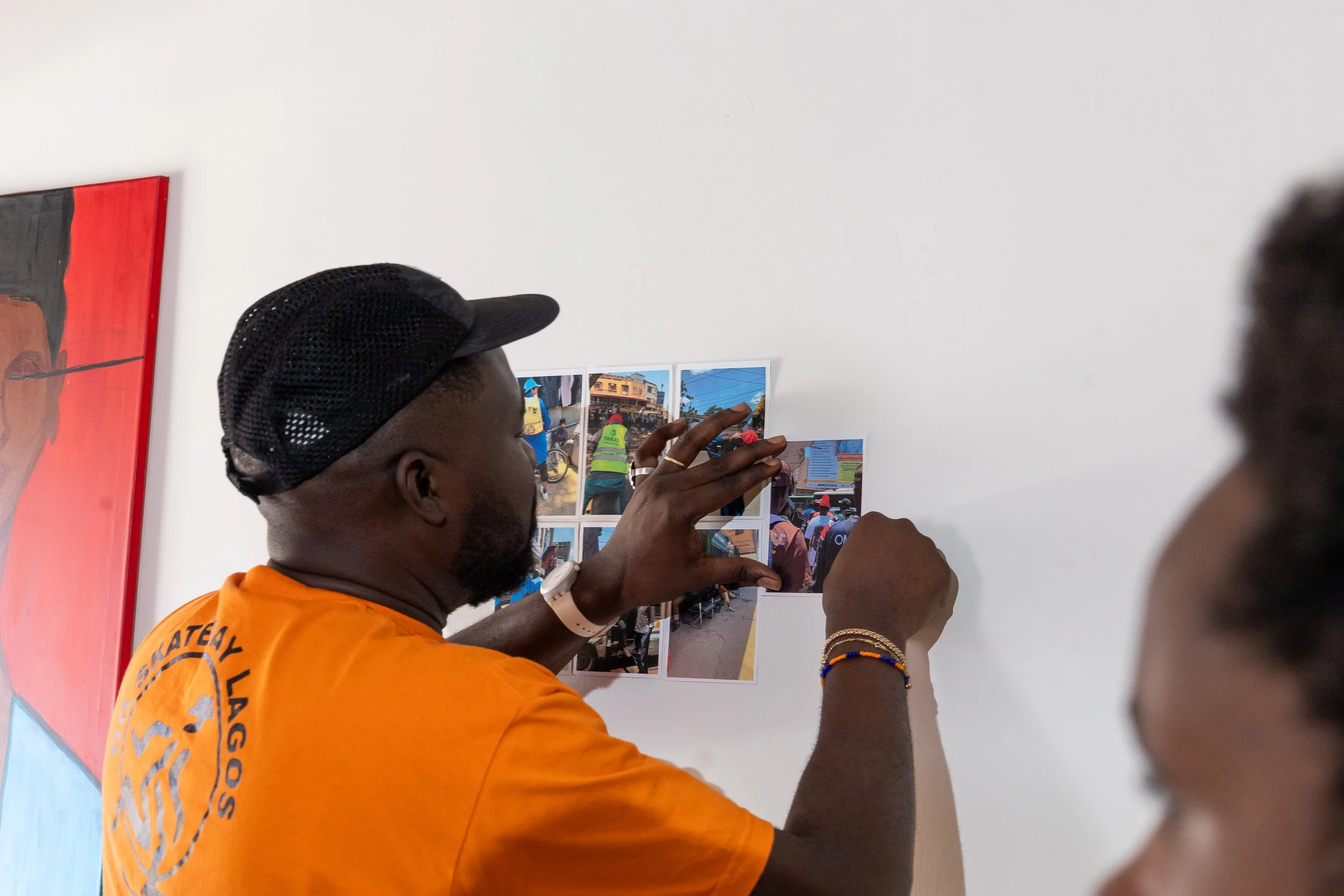
Workshop facilitated by WAFFLESNCREAM Founder, Jomi bello
What do you think distinguishes this platform from other cultural platforms in Kenya and Africa?
I wouldn’t necessarily say Blueprint is “different.” I think we’re all working toward the same goal, filling the gap in how African creativity is documented and shared. At
this stage, you really can’t have too much documentation of what’s happening on the continent. So rather than drawing lines of distinction, I see Blueprint as an addition to what’s already being done by other incredible platforms like Tangaza, for instance. We’re all tackling the same issue from different angles, and the more voices there are, the stronger the movement becomes.
Education is at the heart of Blueprint. Why was knowledge-sharing such an essential part of your vision?
For me, Blueprint has always been more than a publication. At its core, it’s an educational platform, almost an institution, where the goal is to share knowledge as widely as possible and to build meaningful connections across the continent.
Education is the foundation because, when I started out as a fashion designer, I felt such a huge lack of resources. Yes, you could reach out to a few people here and there, but the consistency just wasn’t there. The amount of information available locally was so minimal compared to what you could access in the West. And that’s the easy temptation, to run to Western frameworks because they’ve documented everything: how to build a brand, how to go global, how to sustain a creative career. But all of it comes from a Westernized perspective. For me, that was the gap. If we’re going to build sustainable industries here, we need Pan-African systems of knowledge: Africans learning from Africans, teaching Africans, and building Africa together.
That’s why knowledge-sharing became essential to Blueprint. Beyond workshops and masterclasses, whenever we bring international collaborators to Kenya, we make sure to connect them with local counterparts, like when Free the Youth worked with Studio 18, or when WAFFLESNCREAM partnered with Zamani Skateboards. These partnerships are also forms of education, creating real exchange and collaboration instead of extraction. Right now, everything we do is about amplifying that. Whether it’s through the knowledge we archive in our database, the resources we pass on to cohorts, or the panels and workshops we organize, education runs through it all.
Because the reality is: our current resources are still too few. Which makes it even more urgent to keep documenting, teaching, and passing knowledge on. That’s the heartbeat of Blueprint.
How do you choose the mentors and practitioners that you bring into your workshops and panels? What makes someone a Blueprint kind of teacher?
We’re very intentional about who we bring in. For us, a Blueprint teacher is someone who has put in the work for a significant period of time, usually eight years or more, and has shown steady, exponential growth during that journey. They’re people who’ve managed to partner with global entities like Adidas or Nike, or who’ve built and sustained an international presence. But beyond the accolades, what matters most is authenticity. A Blueprint mentor is someone who can hold that global visibility while still staying true to the continent, someone whose work is rooted in Africa, whose perspective hasn’t been diluted by the demands of the West. That balance of global reach and local grounding is what makes their lessons so valuable for our community.
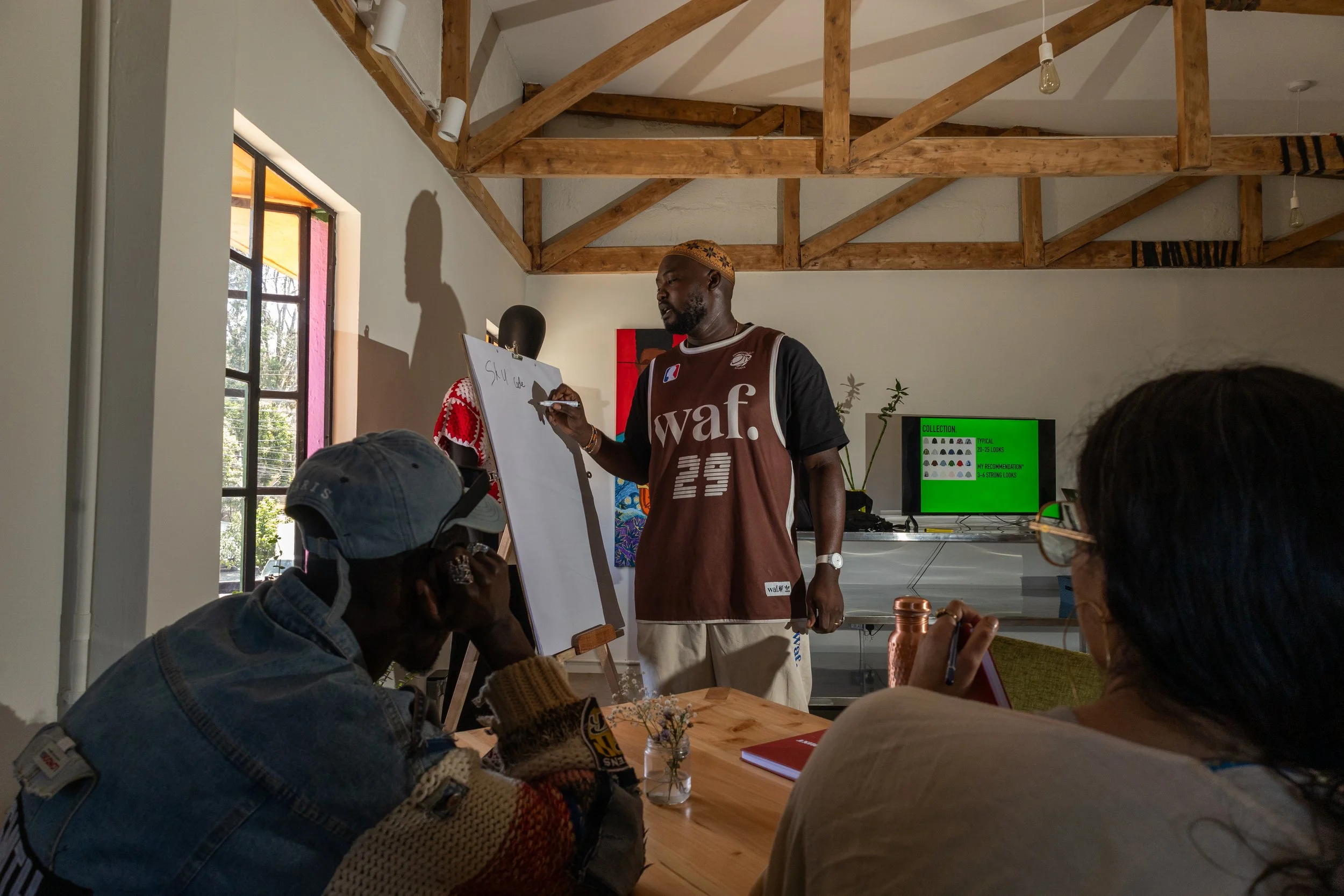
Workshop facilitated by WAFFLESNCREAM Founder, Jomi bello
What have you learned from the young creatives who you've taken through some of these Blueprint programs?
One of the biggest things I’ve learned is just how much young creatives feel the lack of African references when it comes to building a brand. For so long, the examples available to them have been Western frameworks, and many felt they had to shape themselves to fit that mold in order to be taken seriously. I remember during an intense one-week workshop we hosted with Jomi Bello, the founder of WAFFLESNCREAM, this really came to light. Even the way he structures his drops and collections is completely different; it isn’t tied to autumn/winter or spring/summer cycles. His approach is deeply African-centric, built around rhythms and realities that make sense here. For many in the cohort, that was a revelation.
They hadn’t even considered that they didn’t need to conform to Western templates in order to build successful brands. The feedback we got was that it opened their eyes to the possibility of creating from a place of authenticity rather than just trying to be digestible for the West. And for me, that’s been one of the most important lessons to witness.
Is there a moment from a workshop or event that made you pause and think, ‘This is why Blueprint exists’?
Honestly, almost everything we do sparks that feeling. But one moment that always stands out happens even before the events begin, during the planning stages with international brands. Often, their first reaction is, “We don’t actually know what happens in Kenya. Is there even a scene there?” Because when people think of the continent’s creative hubs, they usually point to Dakar, Lagos, Cape Town, Jo-burg, or Kigali. Kenya has been left off that cultural calendar. And then they arrive. After just two or three days, they’re blown away. They see how vast the culture is here, how rich the resources are, how much is happening in the street-wear and fashion scenes. That shift, from skepticism to awe, always reminds me why Blueprint exists. It’s about opening people’s eyes to the reality of Kenya’s creative ecosystem and making sure we’re no longer left out of the conversation.
Street-wear has become a focus for you. Why does streetwear feel like such a powerful lens for culture in Kenya today?
Kenya has always been known for very chic fashion. From the colonial era through to the rise of local brands, the fashion associated with Kenya has often been polished, elegant, and beautifully made, even with the limitations of our small-scale manufacturing industry. Street-wear pushes that narrative in a completely different direction. It’s raw, it’s accessible, and it thrives on chaos. You can make it from secondhand fabrics on the market, experiment with what’s available, and drop pieces spontaneously. That urgency, the fact that someone can release a hat today and a t-shirt tomorrow without waiting for “autumn/winter” or “spring/summer”, feels like such an honest reflection of life. Because life itself is messy, urgent, and chaotic, and street-wear embraces that instead of hiding it.
That’s why we decided to center our Blueprint cohorts this year around street-wear. It’s what people are wearing now, and it reflects a broader cultural shift. The old formalities of fashion are fading, and people want clothes that make them feel comfortable, unique, independent, that give them ownership of their lives. Street- wear embodies all of that, which makes it the perfect lens through which to understand where Kenyan culture is today.
How do you balance the global influences of street-wear while protecting local identity and storytelling?
That really happens through the classes. For example, in a workshop we did with Jomi Bello, he insisted we wouldn’t use the internet at all. Instead, we walked through town. Everyone had to take 15 photos, then choose two. Those images became the mood boards for their collections. That exercise was fascinating because it forced people to look inward, to draw inspiration from their environment rather than defaulting to Pinterest or Instagram.
I’m also learning alongside everyone else. A lot of my education and referencing happened in Europe, so I naturally lean toward Western influences. But now, I’m also doing the work of unlearning, of seeking new approaches and absorbing tips from people who understand local textures, histories, and visual languages better than I do. We’ve reached a point where there’s enough referencing within the continent to draw from, so it becomes a matter of choice. What matters is being intentional. The choices you make ultimately show up in your product, so it’s important to be deliberate about where you pull from and how you translate that into design.
What kind of ripple effects have you seen from Blueprint’s work so far in individuals, in communities, in the wider industry?
I think the ripple effects show up in the way we feed off each other. I’ve seen my work reflected in people who came before me, and I see it in those coming after me. I’ve borrowed from others, and people have borrowed from me. It’s this ongoing exchange of ideas, where we take what works, build on it, and push it further. That’s how the ecosystem grows.
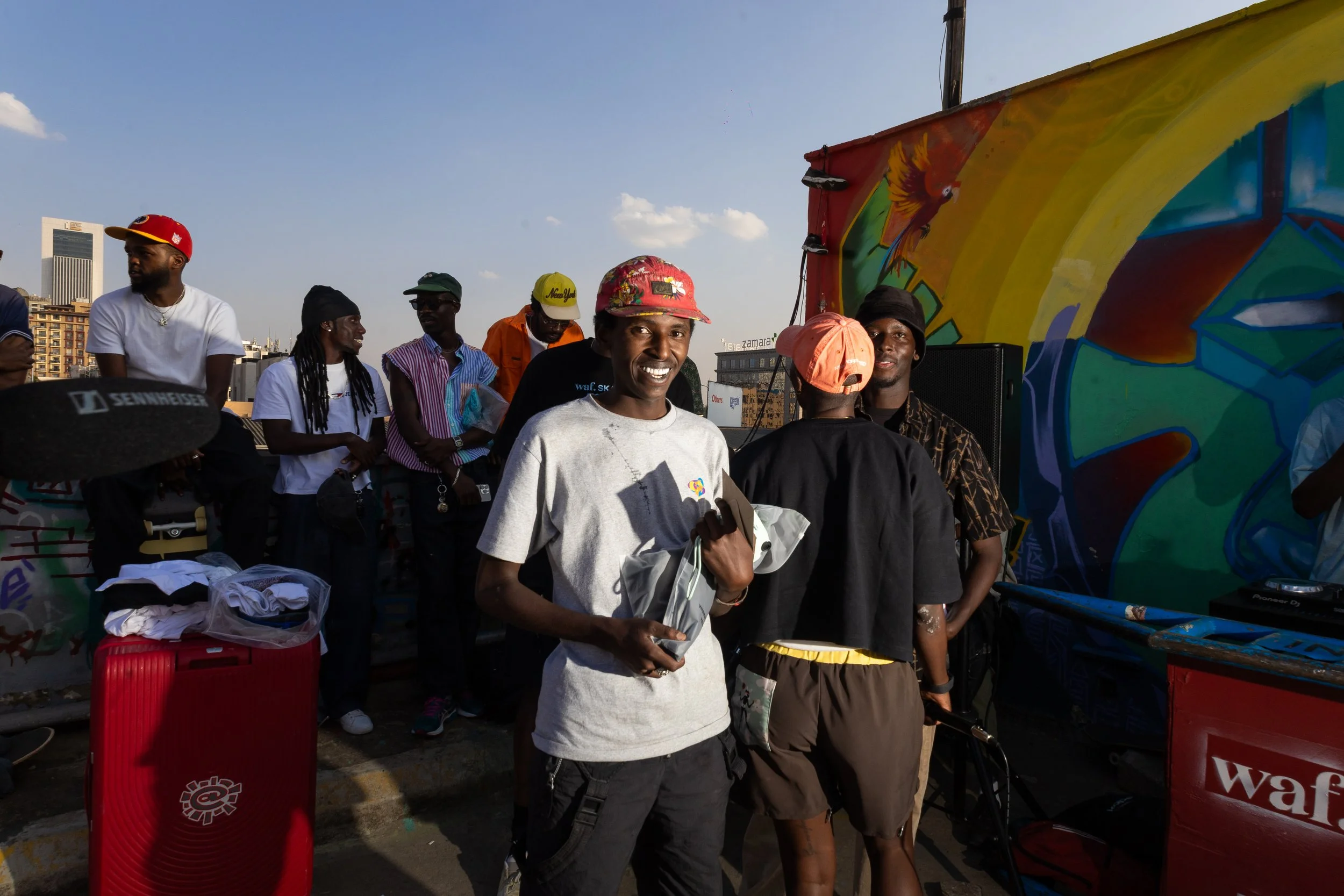
BLUEPRINT x WAFFLESNCREAM x Zamani Skateboards Skate jam
What are some of the challenges you've experienced in executing your vision that people on the outside may not really see or understand?
Funding has definitely been the biggest challenge. Because we’re an educational platform and not-for-profit, it’s been difficult to attract consistent financial support. Grants, which should be a natural fit, are often such a painful and competitive process, especially when the funding pools, largely controlled from the West, are so small and everyone is fighting for the same limited resources. That said, we’re still young, and with time we’ve been able to find facilitators who deeply align with our mission. So the real challenge now is sustaining the work and continuously creating spaces where learning and exchange can happen without being slowed down by financial strain.
Looking into the future, how do you see it changing in the next decade or so, and where do you see Blueprint fitting in there?
I believe Africa’s creative industry will be far more self-sustained in the next 10 years. We’ll be less reliant on the West for support, approval, or acknowledgement, and with increased buying power, we’ll be able to consume and celebrate more of our own. What we’re building today is a direct reflection of what the next decade will look like, so the work we do now really matters. To get there, I think we need to shift our focus from borders to collaboration, asking ourselves questions like: what does growth look like for entities such as Metamorphosis or Studio 18 on the continent? And how do their individual trajectories contribute to the strength of Africa’s creative ecosystem as a whole? For Blueprint, the goal is to act as a catalyst. We see education itself as a catalyst, and that’s where we position ourselves, working with brands, for instance, to examine their five-year vision and helping them achieve it in three. In that way, Blueprint isn’t just supporting growth; it’s accelerating it and helping shape a more robust creative future for the continent.
If you had unlimited resources tomorrow, what dream project or program would you launch through Blueprint?
Just create a school. That's the goal.
When people look back 20-30 years from now, what do you hope this platform will be remembered for?
I think it might be remembered as an entity that fed the ecosystem or the creative industry on the continent.
How has steering Blueprint shaped or changed you?
I used to work in isolation, and I used to try to think how I could be the biggest brand or be a better brand or make it. But right now, I'm kind of like having taken a step back. I think now I'm focused on creating the infrastructure in order to allow people to do that. So, that's the biggest change.
When you're having a hard day or when you're facing certain challenges in your line of work, what inspires you to keep going?
Honestly, I'm a huge fan of rest. If you rest before you're burnt out, you can keep going. I try to listen to my body a lot. But of course, there are days where things need to be done. When that happens, I usually just go to the gym. The gym always allows me to restart my day. Even if things aren’t going well, I’ll stop, take an hour in the gym, and then come back to work with a clearer perspective.
What do you wish every young African creative could hear right now?
Oh, just do what you're doing. Use whatever resources you have right now. Don't think about what you could do or would do, just do what you can, and do it well.