
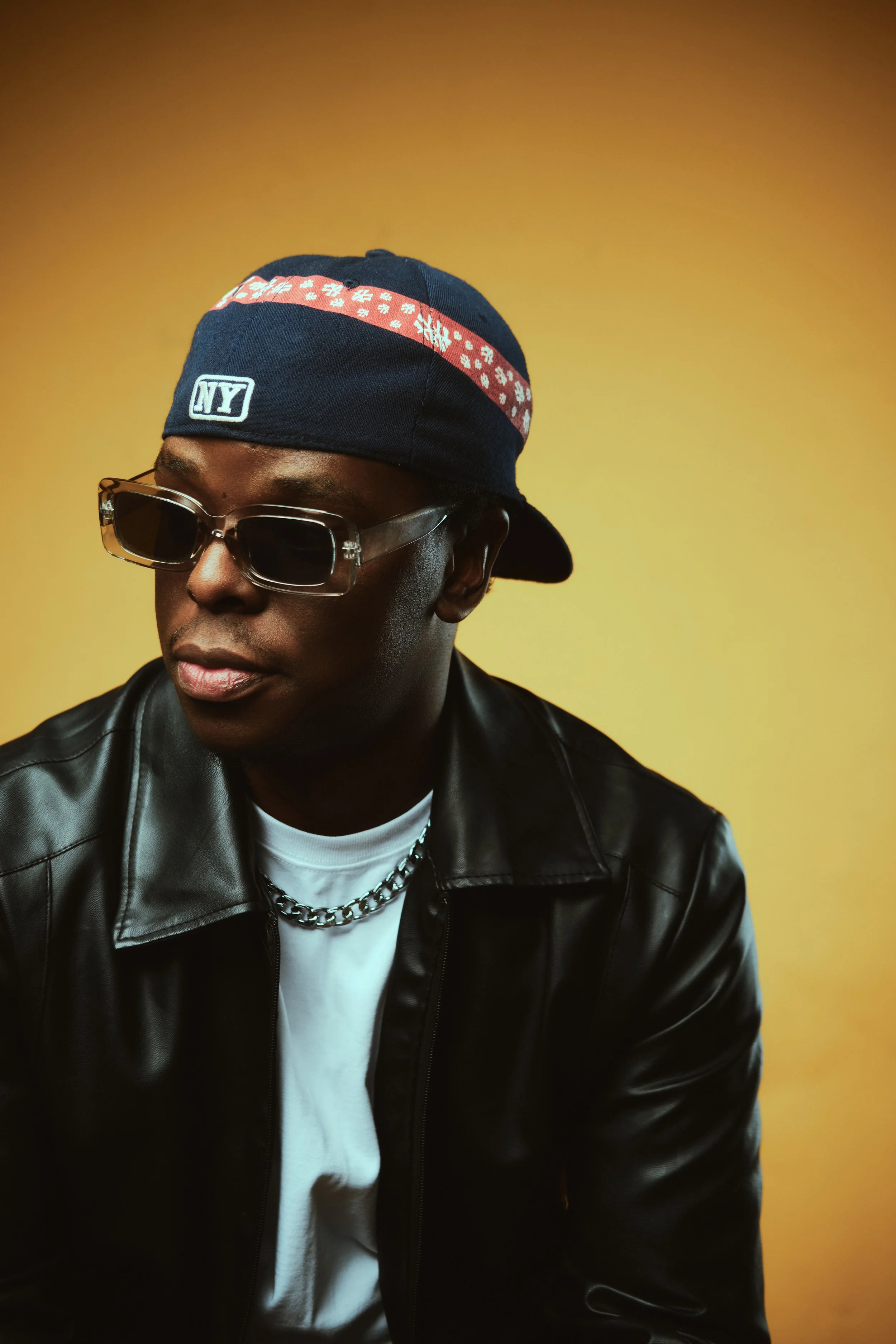
Inside Kyle Simbwa's Musical World and The Making of 'East African Summer'
For Kyle Simbwa, music began with a guitar and a slightly less serious ambition. As a child growing up in Kampala, he watched people play guitar and noticed something that seemed particularly important at the time: the guitar players always seemed to have girls around them. He wanted in. “I was like, man, I want to pick up girls too,” he says, laughing. “So I wanted to play guitar because of that.” It would be easy to mistake that story for the beginning of a hobby. It was anything but. By eight, Simbwa had joined his school choir. A few months later, he had already decided that music was something he wanted to do for the rest of his life.
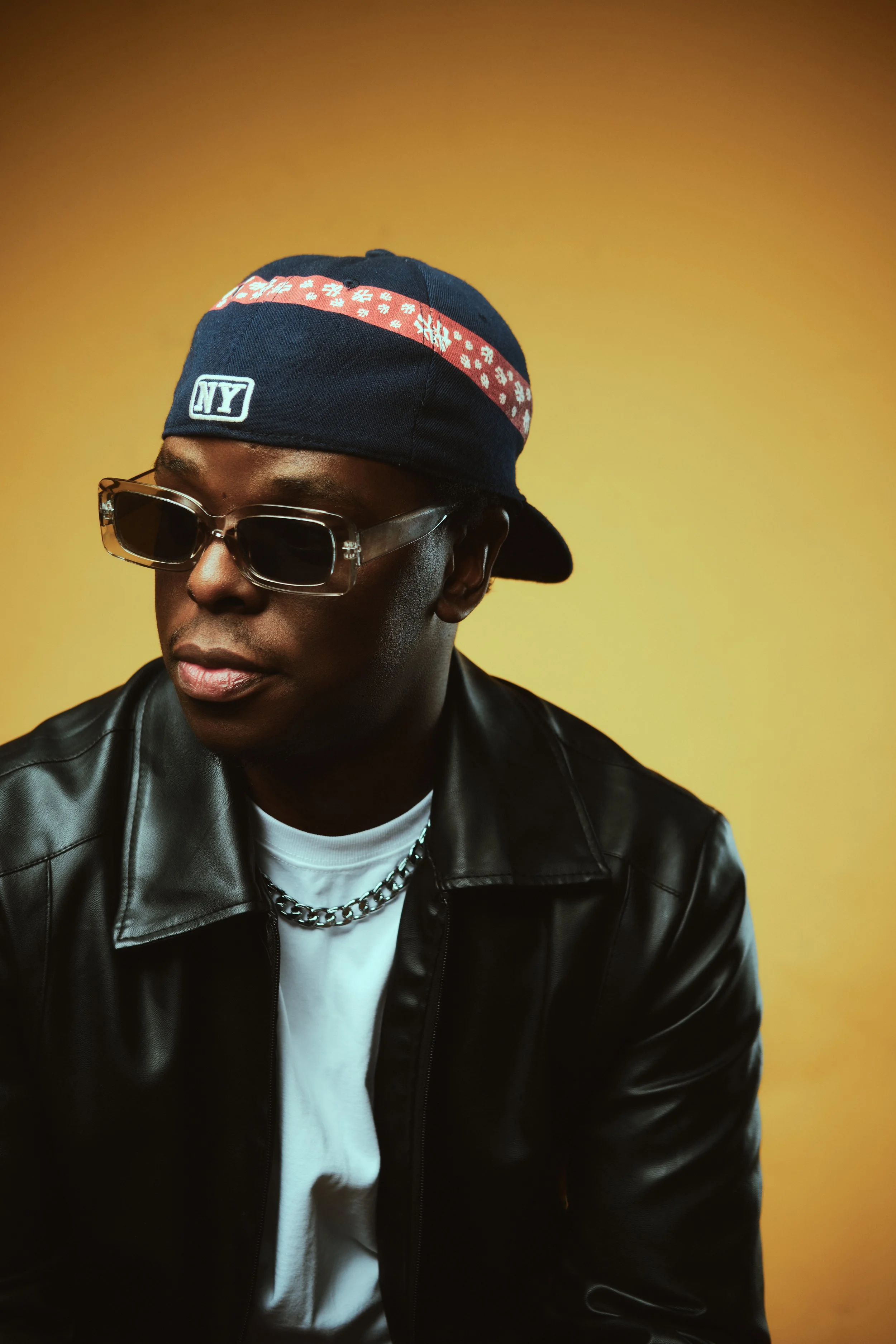
Kyle Simbwa
More than a decade later, that childhood impulse has blossomed into a career as a vocalist, multi-instrumentalist, songwriter and producer. His latest project, East African Summer, is perhaps his clearest statement yet of the kind of artist he wants to become. Getting there however, was never particularly straightforward.
Simbwa did not come through a formal music education. When he told his mother he wanted to learn guitar, she took him to Kampala Music School. One look at the fee structure was enough for him to realise that formal training was probably not going to happen, so he taught himself. There was trial and error, lessons gleaned off trusty YouTube, friends who were classically trained and the kind of informal exchange that happens when young musicians spend enough time around one another. He learned from them, they learned from him, and gradually he began to understand not only how to play, but how music worked.
His first real encounter with the possibility of making a living from it came when he was 15. A friend who owned a studio needed someone to produce a song in his absence. Simbwa stepped in, made the track and was paid for his work. The amount hardly mattered.“The fact that I still got paid, I was like, wait, I could actually get paid for this?” That moment changed something and illuminated a world of different possibilities. Music was no longer simply something he loved, but something he could build an actual life around.
His parents, understandably, needed more convincing. Simbwa remembers spending so much time at his friend's studio that his grades began to suffer. His explanation is almost disarmingly wholesome: they were not getting into trouble. They were simply young Christian boys spending their afternoons playing music and drinking Mirinda and soda. Still, his parents wanted him to finish school before taking the creative route seriously. Simbwa understood their concerns, even as he continued pursuing music. “I gave these guys a headache,” he laughs. So he acquiesced, graduated, and kept making music, eventually producing for other artists and sharpening his instincts behind the scenes before gradually finding the confidence to put his own voice at the centre.
Even then, confidence did not come naturally. Simbwa describes himself as a timid child. He was comfortable disappearing into the crowd, whether in a school choir or elsewhere. Becoming an artist meant learning to occupy space. Around 2019, something shifted. He had made a simple song and sent it to a musically inclined friend, expecting little. The reaction surprised him. “They said, ‘What, you did this? I thought this was some undiscovered artist, but you did this?’” he recalls. For the first time, he heard someone else confirm something he had only begun to suspect. “I was like, wait a minute. I’m actually good at this.”

Kyle SImbwa
That realization has been followed by years of experimentation. Simbwa describes himself simply as an Afro-R&B artist, although even that label comes with some hesitation. His influences stretch across pop, R&B, rock, punk and pop-punk. John Bellion and Blxst are among the artists he considers major influences, partly because of their ability to move between songwriting, production and performance. That range is central to understanding Simbwa. He is not an artist who arrived with a fully formed sound and has spent the years polishing it. His music has been a process of discovery. “I really didn’t know,” he says when asked if he knew what kind of music he wanted to make when he started. “But I knew I wanted to make music.”
That uncertainty has become part of his creative method. He makes things, tests them, abandons some, returns to others and slowly works out what sounds like him. It is a process that can become obsessive. Simbwa writes and rewrites songs until he finds something that feels authentic. Ideas can arrive anywhere: on his way to work, while doing chores, or even in dreams. When an entire song appears in his sleep, he wakes up knowing that he has very little time before it disappears. His phone's voice recorder becomes an emergency tool, allowing him to mumble melodies, lyrics and beats into existence before they vanish. Then there is the production. Simbwa produces. He plays guitar, keys and other instruments. He writes. He records. He is involved in the mixing process, while also handling the visual and promotional demands that come with being an independent artist. “Heavy is the head, man,” he says. “It’s a lot of work.”
Yet it is those multiple roles that have also made collaboration easier. Having experience across the production process means he can walk into a session and understand what is happening at almost every stage. He knows how to approach a vocal, how to write, how to arrange and how to communicate with other musicians.
For all the work that goes into making music, however, one of his biggest lessons has been learning when to stop. His earlier project, Person taught him the value of intentionality, but also the necessity of letting go. Some of those songs had existed for years before they were finally released. There was always another adjustment that could be made, another sound that could be changed. At some point, the artist has to accept that the song can exist as it is. That lesson is especially relevant to East African Summer.

East African Summer artwork
The title sounds grand. Simbwa knows it. “It’s a very ambitious title,” he admits. But the ambition is deliberate. East African Summer is built around seven songs that attempt to create the feeling of a contemporary East African summer. For Simbwa, that means more than making something enjoyable to play at a party. The project is also an argument for looking closer to home. He wants young East African creatives to recognise the music being made around them. There is, in his view, an enormous appetite for music from outside the region, particularly from larger continental markets. Simbwa wants to add another possibility to the conversation: what if East African artists can create their own versions of the sounds people are already enjoying elsewhere?The distinction matters to him. He is not interested in pretending that his influences are exclusively African. Much of the music that shaped him came from outside the continent, and he has no interest in hiding that. “I will wear my influences proudly,” he says. “Because it’s who I am.”
That honesty sits at the centre of East African Summer. The project draws from a wide musical palette, but Simbwa is interested in what happens when those influences meet the sounds and references that surround him. The result is a project that asks what an East African summer might sound like if young artists were allowed to define it themselves. It also forced Simbwa into unfamiliar territory. Love and heartbreak come naturally to him. They are the subjects he instinctively returns to when he writes. East African Summer, however, demanded something different. His manager and collaborator, Naj, challenged him to make party music. For an artist who describes himself, somewhat proudly, as “the quintessential emo kid”, this was a creative stretch. “I’m an emo kid,” he says. “When people aren’t looking, I listen to a lot of punk and pop punk.”
The challenge was not necessarily production. It was writing. Lyrics matter deeply to Simbwa. His love of punk and rock has influenced the way he thinks about songwriting, particularly the vulnerability and directness he hears in the genre. Making a party record therefore meant asking himself difficult questions: what would he want people to dance to? What would he say in that setting? How could he remain honest while making music designed to bring people together? The answer became East African Summer.
The project's collaborative spirit extends beyond its central concept. Simbwa brought in artists he already admired, including MAUIMOON and Tungi, as well as producers such as Dny Beats, Naj and Azoora. Some of those relationships began organically through Kampala's relatively small creative community while others required more deliberate outreach.

Kyle SImbwa
That community is important to Simbwa's understanding of where Ugandan music is headed. He sees a younger generation willing to experiment, collaborate and push beyond established boundaries. Artists recommend artists. Photographers work with musicians. Videographers, producers and event organisers build alongside one another. “Because we’re a small community, we look out for each other,” he says. That sense of community is also reflected in the cover of East African Summer. The original idea was more ambitious, but limited resources forced Simbwa and his collaborators to find a balance between what they imagined and what they could realistically execute. They turned to Pinterest for references, worked with photographer Powell and brought friends into the shoot. Those friends now appear on the cover, becoming part of the visual memory of the project.
It is fitting that the image feels communal. East African Summer may carry Simbwa's name, but he is clear about how many people it took to bring it into the world. There are the collaborators, producers, photographers, designers, editors and distributors. There is Naj, with whom he has been figuring out how to stretch limited resources as far as possible. And there is the day job. Like many independent artists, Simbwa is financing his ambitions while working outside music, directing money from his employment towards the creative work and hoping that the music will eventually become capable of sustaining itself. It is expensive. It is difficult. He does not romanticise that part, but he keeps going. Perhaps that is the most revealing thing about Simbwa's journey. Beneath the bright, easygoing surface of East African Summer is an artist who has spent years learning how to trust his own instincts. First as a shy child hiding inside a choir, then as a teenager discovering that someone would pay him to produce a song and later as a young artist learning to put his own work into the world.
With East African Summer, Simbwa wants people to dance, but he also wants them to hear something of where he comes from and where the region’s music is heading. He hopes the project gives listeners outside East Africa a way into those sounds, while giving him room to grow into the artist he wants to become. More than anything, he wants to be taken seriously. “I hope to be taken seriously as an artist,” he says. There is a poignant significance to that admission, especially knowing that there was a time when someone else had to convince him that he was good enough to do this. Now, he is making the case for himself.
There is still plenty he does not know, so many dreams yet unrealized. He wants to make more music, work with artists across East Africa, perform in Nairobi and eventually take the songs to the highest of echelons, but for now, he is content to keep moving and see what comes of it. “I’m really super curious about what else this could offer me,” he says. “And I welcome it with open arms.” For now, there are songs to make and places he has yet to see. East African Summer is just where he happens to be standing at this moment in time.
